






Mini Implant-Supported Dentures in Atlanta, GA
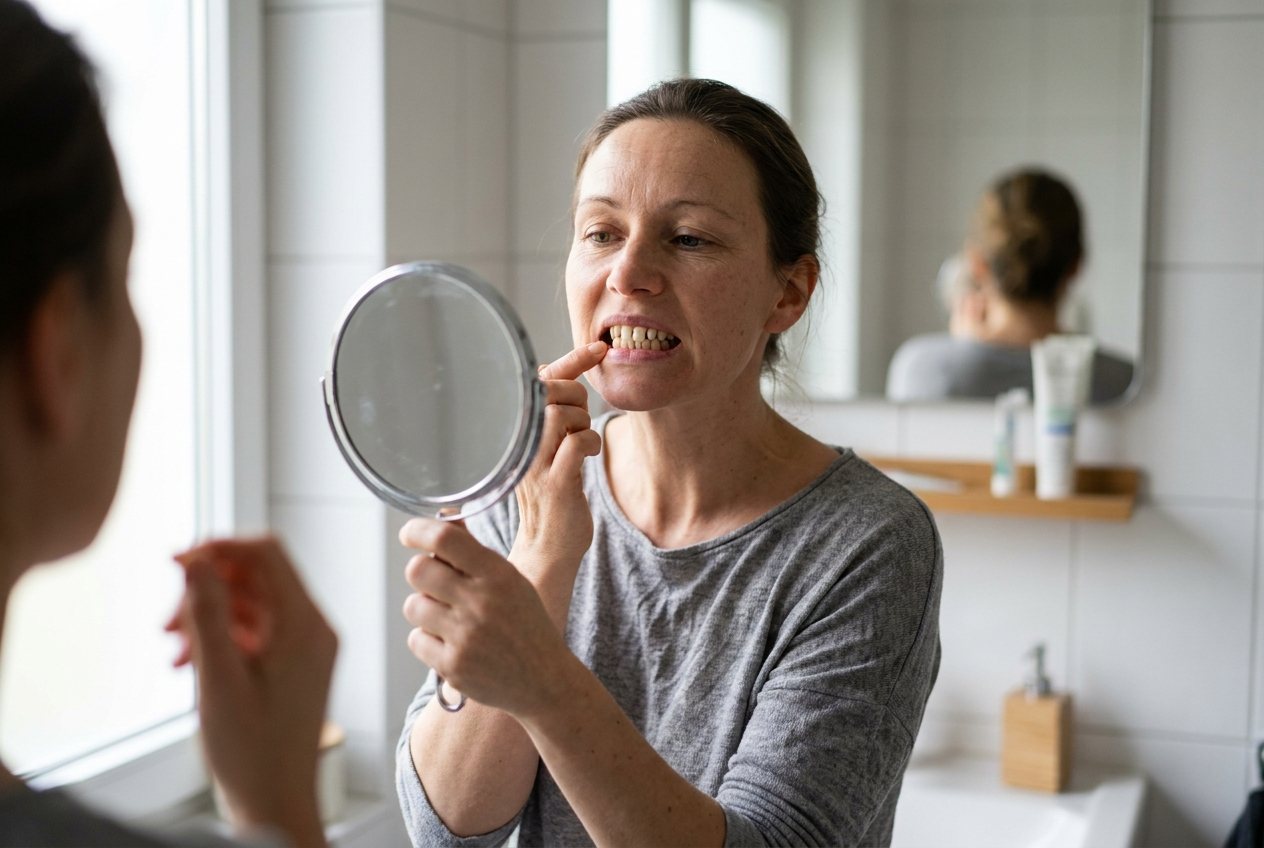
Slipping, clicking, sore spots, foods you have learned to avoid. If your denture has never quite fit right, mini implant-supported dentures anchor it with a few narrow implants, so it finally stays where you put it.
What are mini implant-supported dentures?
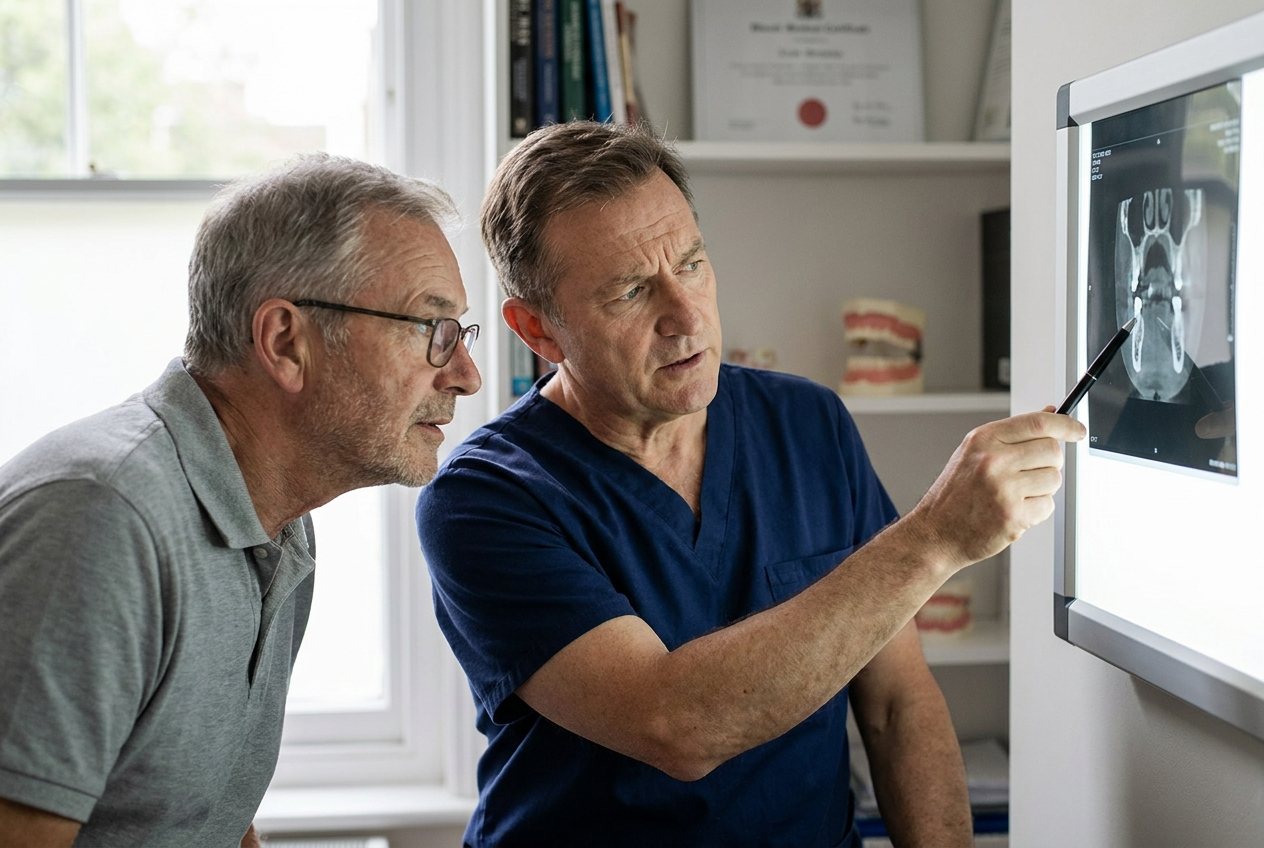
Mini implant-supported dentures are removable dentures that snap onto several narrow-diameter implants placed in the jaw. The denture carries matching attachments, so it locks into position instead of resting on the gums. At ANEWU, mini implants are planned from a 3D scan of your jaw at your first consultation.
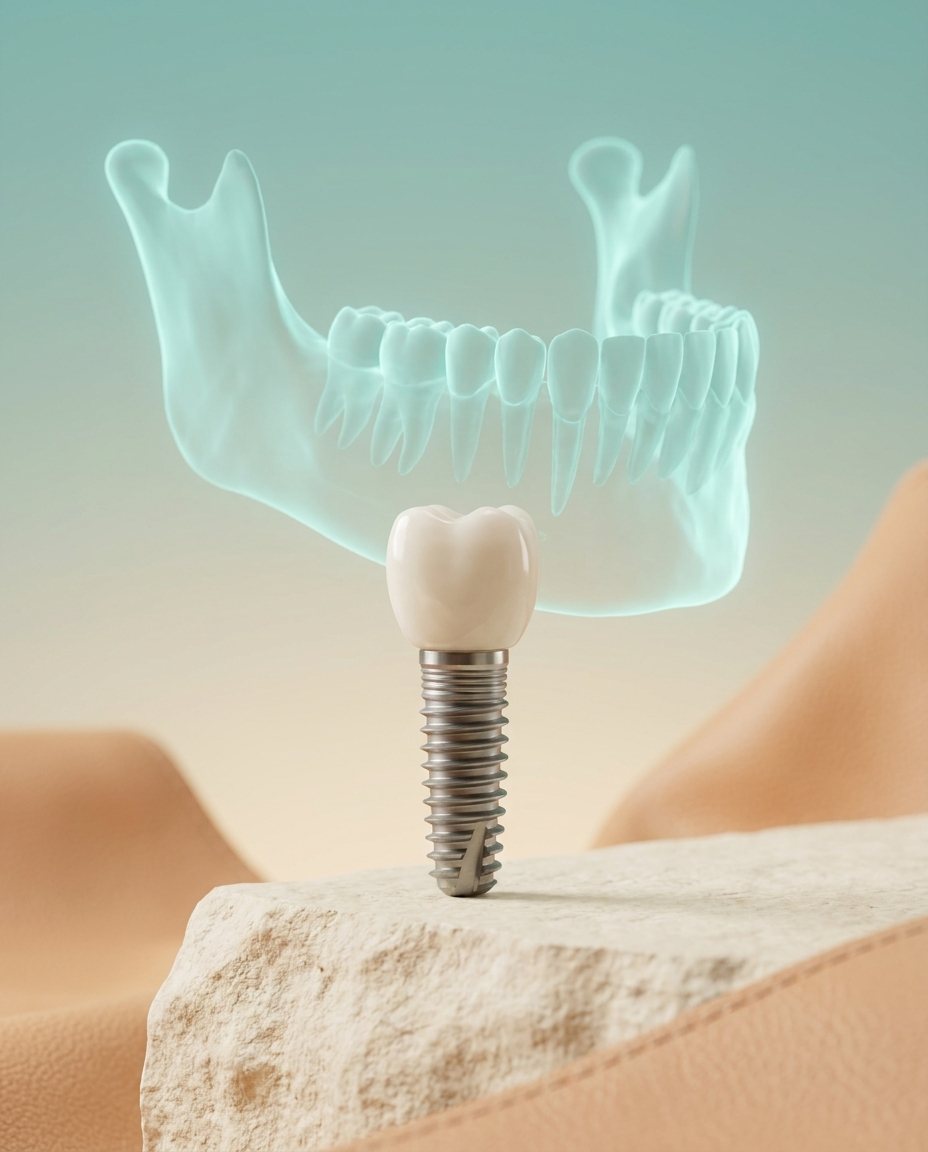
Mini implants are narrower than standard implants, which is why they can often be placed with a less invasive procedure. A few go into the jaw, your denture is fitted with ball or stud attachments, and the two lock together. It works on the same principle as any dental implant treatment: the bone holds the implant, and the implant holds the teeth.
What changes is not how the denture looks. It is what happens when you bite into something. A denture that is anchored does not lift at the back, does not click when you speak, and does not need a rim of adhesive to stay where you put it in the morning.
A denture that is anchored, not resting.
A conventional lower denture has very little to hold onto. It sits on a ridge of bone that keeps shrinking after the teeth are gone, which is why a denture that fit in year one often does not fit in year five. Adhesive is a workaround for a problem that is structural.
Mini implants change what the denture is resting against. Instead of gum tissue over a shrinking ridge, it is held by implants anchored in bone. Dr. Abtin Shahriari plans the number and position from your 3D scan, so the attachments line up with the places your bone can actually support.
Full arch work at ANEWU stays in house, with an on site lab rather than being sent out. That keeps adjustments to the fit of your denture measured in days rather than weeks.

How do I replace missing teeth if my denture no longer fits?
Three routes are common. A new conventional denture remakes the fit but still rests on the gums. Mini implants anchor your denture so it snaps in. A fixed full arch bridge on implants is not removed at home at all. Which one suits you depends on how much jawbone is left to work with.
If you have ever wondered how to replace missing teeth once your denture has stopped fitting, the honest answer is that simply remaking the denture treats the symptom. The ridge underneath keeps changing shape, so the replacement loosens in its turn.
Mini implants sit in the middle of that range: less involved than a fixed full arch restoration, and considerably more stable than adhesive. You still take the denture out to clean it, but it seats the same way every time it goes back in.
Am I a candidate for mini implant-supported dentures?
You are likely a candidate if you already wear a denture that slips, you have enough bone to hold several narrow implants, and you want stability without a fixed bridge. Mini implants can suit ridges that are too thin for standard implants. Dr. Abtin Shahriari confirms that with a 3D scan at your free consultation.
- Your denture slips, clicks or moves when you eat or speak
- You rely on denture adhesive every day
- You avoid certain foods because your denture does not feel secure
- You have some bone loss that limits standard implant options
- You want a less invasive path to stability than a fixed full-arch restoration
- You would rather keep a denture you can still take out to clean
Not every ridge has the bone volume for mini implants, and a denture that is badly worn or was never a good fit may need remaking before it can be retrofitted. Both of those are settled by a scan and an exam rather than over the phone.
Two ways to wear a denture, compared honestly.
Mini implants are not the right answer for everyone, and a surgeon should tell you which conversation your case is actually in.
Mini implant-supported denture
- Snaps securely onto a few small implants
- No daily adhesive needed
- Often less invasive to place than standard implants
- Can work in cases with some bone loss
Traditional, adhesive-retained denture
- Rests loosely on the gums
- Relies on adhesive for stability
- Can slip or click when eating or speaking
- Jawbone continues to shrink underneath over time
| What differs | Mini implant-supported | Traditional denture |
|---|---|---|
| Held in place by | Attachments snapped onto implants | Suction, fit and adhesive |
| Taken out at home | Yes, lifts out for cleaning | Yes |
| Bone underneath | Implants carry load into the jaw | Ridge continues to resorb |
| Surgery involved | Narrow implants, often less invasive | None |
| Commonly suits | Long-term wearers with a thinner ridge | Someone newly in a denture or between stages |
Both are in use at ANEWU. The difference is whether your denture rests on a ridge that keeps changing or anchors to something that does not.
Can I get implants if I have been told I do not have enough bone?
Often, yes. Mini implants need less bone width than standard implants, which is why they suit ridges thinned by years of denture wear. If even that is not enough, bone grafting rebuilds the ridge, or zygomatic implants anchor in the cheekbone. A 3D scan at your consultation shows which applies.
Being told no at another office is common among long-term denture wearers, and it is usually a question of bone width rather than bone height. Narrow implants need less width to stay inside the ridge, which is what puts the conversation back on the table for a lot of people.
Where the ridge is genuinely too thin for either, bone grafting adds volume back over several months so implants can follow afterwards.
In the upper jaw, when the back ridge has lost height beneath the sinus, zygomatic implants anchor above it in the cheekbone instead. Your surgeon will assess this with a 3D scan at your consultation.
What happens when mini implants are placed, step by step?
Four stages. Your jaw is scanned in 3D at the consultation to map bone width and implant position. The mini implants are placed in a single appointment. Your denture is fitted with matching attachments, either retrofitted or newly made. The bite and fit are then adjusted until the denture seats cleanly.
- 01
3D imaging assessment
Your jaw is scanned in three dimensions during your first visit, which confirms whether mini implants suit your ridge and sets where each one should go.
- 02
Mini implants placed
A few narrow-diameter implants are placed in the jaw, often with a less invasive procedure than standard implants.
- 03
Your denture is retrofitted
Your existing denture, or a new one, is fitted with the attachments that snap onto the implants.
- 04
Fit and bite adjusted
The denture is seated, checked and adjusted so it clicks in the same way every time and the bite lands evenly across both sides.
What recovery actually feels like.
Less is usually made of this than patients expect, but it is worth knowing before the day.
Because mini implants are narrower, placement is often less invasive than standard implant surgery, and most people describe the days afterwards as more manageable than a tooth extraction. Soreness and mild swelling around the sites are the usual complaints, and they settle.
- Soft foods for the first several days while the sites settle down
- Gentle salt water rinses, kept away from the implant heads at first
- Any prescribed medication taken exactly as directed
- A follow-up visit to check how the denture is seating
- Written post-op instructions to take home with you
Results vary from patient to patient. How quickly a denture starts to feel normal depends partly on how long you wore a loose one beforehand, because the habits built around a denture that moves take a little while to unlearn.
How much do mini implant-supported dentures cost in Atlanta?
Cost at ANEWU depends on how many mini implants your case needs and whether your current denture can be retrofitted or has to be remade. Dental insurance typically does not cover implant treatment. ANEWU accepts CareCredit and Proceed Finance and can arrange a monthly payment plan before your procedure.
Dental insurance and implant treatment
Implant treatment sits outside what most dental policies cover. Where a plan does contribute, it tends to go toward part of the denture rather than the surgery itself. You will be told plainly what your own plan is likely to do before you commit to anything.
Financing through CareCredit and Proceed Finance
A monthly payment plan can be arranged before your procedure, and Visa, MasterCard and Discover are accepted as well. The full range of implant financing options is laid out in detail, and your consultation covers the cost of your own treatment plan rather than a range.
Where is this treatment performed?
Implant surgery is performed at all three ANEWU offices in Georgia. Patients north of Atlanta most often use the Cumming or Dawsonville offices, both just off the GA-400 corridor, while the Buckhead office serves patients inside the perimeter. Records move between offices, so follow up can happen at whichever address is closer.
Mini implants, answered.
Straightforward answers to the questions we hear most at a consultation.
Ask us directlyMini implants have a narrower diameter than standard implants, which often means a less invasive placement procedure. They're paired with a denture that attaches directly to them, rather than supporting a fixed bridge on their own.
In many cases your existing denture can be retrofitted with attachments that snap onto the mini implants. Whether yours can depends on its condition, how well it fits now, and how much the ridge underneath has changed since it was made.
Often, yes. Because mini implants are narrower, placement can sometimes be done with a less invasive approach than standard implants, and recovery is typically more comfortable.
No. Once your denture is attached to the mini implants, it snaps into place and stays there, so you shouldn't need adhesive.
The surgeon who places your mini implants.
Every implant procedure at ANEWU is performed by Dr. Abtin Shahriari, an oral surgeon specializing in implant dentistry. He holds a DMD and an MPH, completed 8 years of specialty training including the University of Pennsylvania and Emory University, and has performed thousands of surgeries across the three Georgia offices.
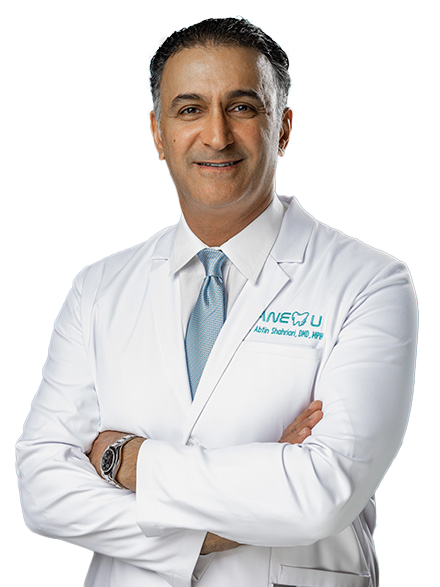
Dr. Abtin Shahriari, DMD, MPH
Dr. Abtin plans every implant case from a 3D scan, from a single mini implant to full arch reconstruction, and is the founder of Project Global Smile. Full arch work stays in house at ANEWU with an on site lab rather than being sent out.
Stop living around a loose denture.
A free consultation will tell you whether mini implants can anchor your denture, and what it would take.
Reviewed by Dr. Abtin Shahriari, oral surgeon specializing in implant dentistry. Last updated September 2026.