





Zygomatic Implants in Atlanta, GA
Zygomatic implants anchor in the cheekbone instead of the upper jawbone, giving patients with severe upper jaw bone loss a path to a fixed, full-arch smile, often without bone grafting first. If you have ever wondered why one surgeon says no to implants and another says yes, this is usually the reason.
How do I replace missing teeth when my upper jaw has lost its bone?
Missing upper teeth are replaced three ways when bone is gone: bone grafting rebuilds the jaw before standard implants, zygomatic implants anchor in the cheekbone instead of the jaw, and pterygoid implants anchor at the back of the upper arch. A 3D scan at ANEWU shows which your anatomy supports.
If you have ever wondered how to replace missing teeth after years in an upper denture, the honest answer is that the plan depends less on the teeth than on the bone underneath them. The upper jaw loses bone once teeth are gone, and the back of the upper jaw sits beneath the sinus, so some arches cannot hold a standard implant at all.
Zygomatic implants are one route inside full arch dental implant treatment rather than a separate category of dentistry. They are used when the jaw itself can no longer hold the anchors, and the result is still one fixed bridge that you do not take out at night.
When enough bone does remain, that same fixed arch is usually carried on All-On-4 implants placed in the jaw itself. Zygomatic implants exist for the cases where that is not possible.
A different anchor point for severe bone loss.
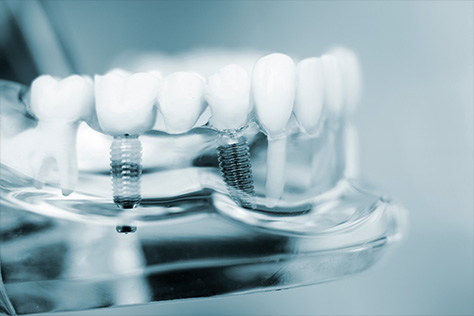
Most dental implants anchor directly in the jawbone. When the upper jaw has lost too much bone to support that, whether from long-term tooth loss, denture wear, or a failed previous implant, zygomatic implants offer another option. They're longer implants that pass through the upper jaw and anchor into the zygomatic bone, the cheekbone, which is typically much denser and less affected by the bone loss that limits traditional implants.
Because zygomatic implants don't depend on the same bone that's already been lost, some patients who've been told they aren't candidates for traditional implants, or who would otherwise need extensive grafting, can move forward with a fixed, full-arch restoration without waiting through a graft and healing period first.
Not every upper jaw is suited to zygomatic placement, and the cheekbone has to be sound enough to carry the arch. The imaging answers that, not the diagnosis you arrived with.
Am I a candidate for zygomatic implants?
You may be a candidate if the upper jaw has lost too much bone to hold standard implants and the cheekbone is sound enough to carry them instead. At ANEWU that is confirmed on a 3D scan taken at your free consultation, not on a flat x-ray brought in from somewhere else.
- You've been told you have severe bone loss in the upper jaw
- You've been told you aren't a candidate for traditional implants due to insufficient bone
- A previous implant in your upper arch has failed
- You'd like to avoid a lengthy bone grafting and healing process, if your anatomy allows
- You're being evaluated for a fixed, full-arch restoration in the upper jaw
- You have worn an upper denture for years and are finished with the movement and the adhesive
If another office told you implants are off the table
That verdict is usually about bone volume in the upper jaw, and it is often reached from a flat x-ray. A flat film shows height but not width, so a second opinion built on 3D imaging and guided surgery can reach a different conclusion about the same jaw.
Zygomatic implants are one of the reasons that conclusion can change, because they do not rely on the bone that was lost. A jaw that cannot hold standard implants may still hold a fixed arch. Dr. Abtin Shahriari will confirm which applies to your anatomy.
What happens during zygomatic implant surgery, step by step?
Four stages. Your upper jaw and cheekbone are scanned in three dimensions at the consultation. Dr. Abtin maps where each implant will sit. The implants are then placed so they anchor in the cheekbone, with a fixed temporary bridge for qualifying cases. After healing, the final bridge is fitted.
- 01
Consultation and 3D imaging
Your upper jaw and cheekbone are mapped in three dimensions so your surgeon can see where sound bone remains. It happens during your first visit, so there is no separate imaging appointment to book.
- 02
Your treatment plan
Dr. Abtin sets the path, angle and depth of each implant against your own anatomy, and confirms that the cheekbone can carry the arch before any surgery is scheduled.
- 03
Surgical placement
The implants are placed so they pass through the upper jaw and anchor securely into the zygomatic bone. For qualifying cases a fixed temporary bridge is attached soon after, the same way same-day fixed teeth work. Same-day teeth are available for qualifying cases, not all of them.
- 04
Healing and your final bridge
The implants integrate with bone over a healing period, and your final fixed bridge is then built in the ANEWU on site lab rather than ordered from an outside laboratory. Healing is guided by our post-op instructions, and recovery varies from patient to patient.
See what a rebuilt upper arch can look like.
Drag the slider to compare before and after. These are real ANEWU patients whose smiles were rebuilt with dental implants.
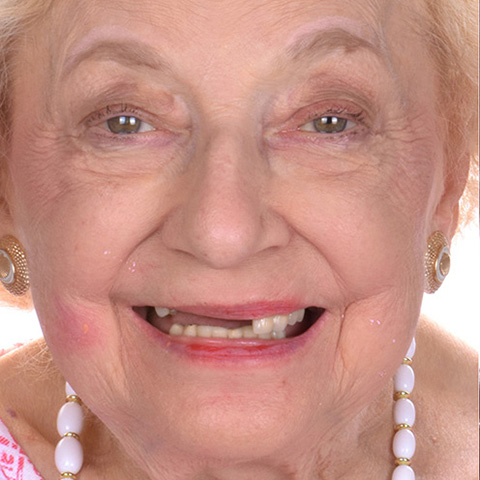
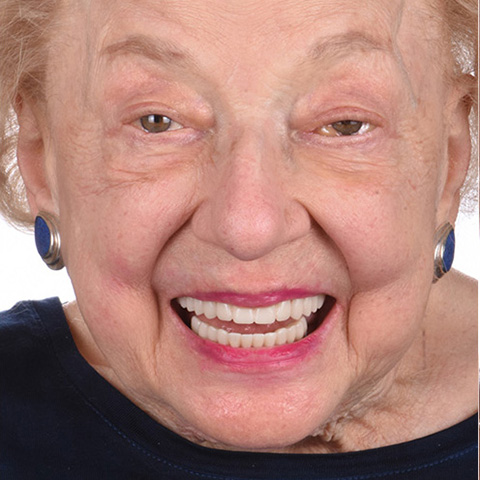 BeforeAfter
Individual results vary. Photos shared with patient permission.
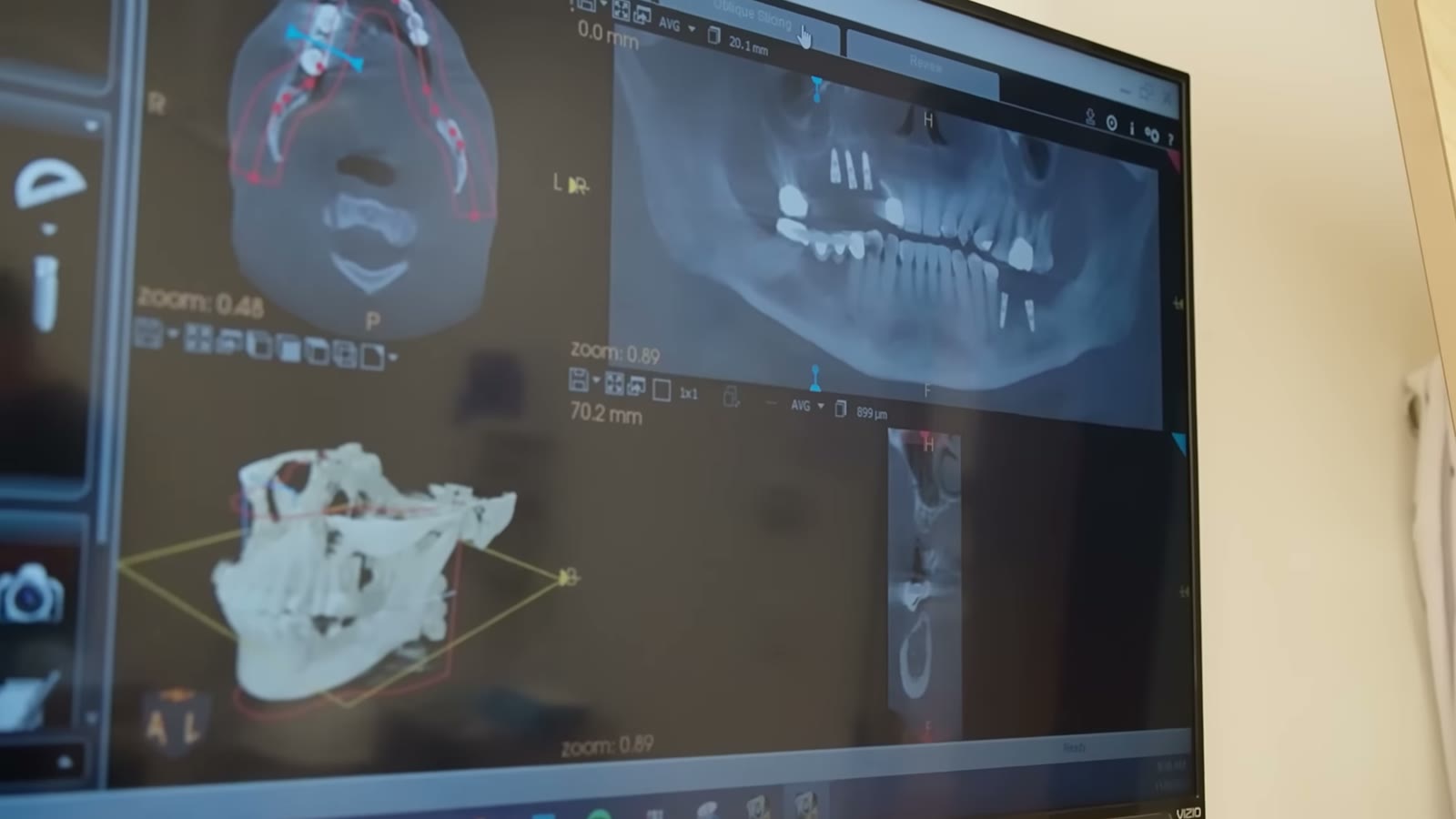
You will see your own anatomy before we touch it.
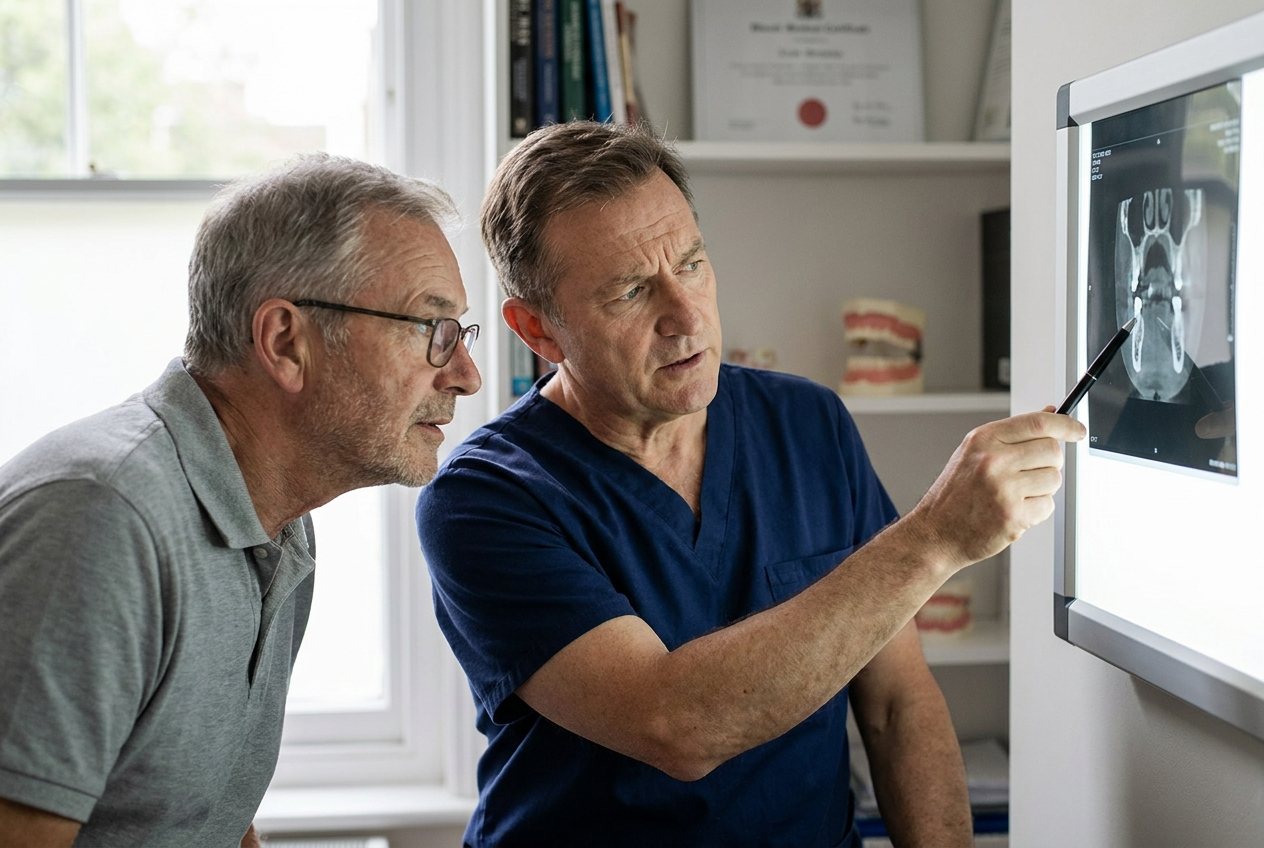
Every zygomatic case starts with a detailed 3D scan of your upper jaw and cheekbone, not a guess. Dr. Abtin reviews your own anatomy with you on screen, explains whether zygomatic implants are the right fit, and walks through what your specific procedure and timeline would look like.
The scan is taken at the free consultation, and it is just as capable of ruling zygomatic implants out. Either way you leave knowing what your own bone allows.
Zygomatic implants vs. bone grafting: which is right for me?
Bone grafting rebuilds the upper jaw over a healing period so standard implants can be placed later. Zygomatic implants skip that step by anchoring in the cheekbone, which can shorten the overall timeline. Grafting suits moderate bone loss, zygomatic suits severe loss, and a 3D scan decides which applies.
With significant upper jaw bone loss there is usually more than one route forward. Bone grafting rebuilds your own jaw over time, and pterygoid implants anchor at the back of the upper jaw instead. Which one fits depends on your anatomy, not on which one you read about first.
Zygomatic implants
- Anchors in the cheekbone, not the bone that's already been lost
- Can sometimes avoid a separate bone grafting procedure
- May allow a more direct path to a fixed, full-arch restoration
- Reserved for more advanced bone loss, confirmed with 3D imaging
Bone grafting + traditional implants
- Rebuilds your own jawbone over a healing period first
- Uses standard implants once the graft has healed
- Often a longer overall timeline
- Well suited to more moderate bone loss
| What differs | Zygomatic implants | Bone grafting first | Pterygoid implants |
|---|---|---|---|
| Where the implant anchors | Cheekbone | Rebuilt upper jawbone | Back of the upper jaw |
| Bone loss it suits | Severe upper jaw loss | Moderate loss | Loss at the back of the arch |
| Separate grafting procedure | Often avoided | Required first | Often avoided |
| Overall timeline | No graft healing to wait through | Longer, the graft heals first | No graft healing to wait through |
| Position planned from a 3D scan | Yes | Yes | Yes |
| Performed at ANEWU | Yes | Yes | Yes |
All three are performed at ANEWU. Which one fits is decided from your own 3D scan at a free consultation, not from the number of implants in the name.
How much do zygomatic implants cost in Atlanta?
Zygomatic implant cost at ANEWU depends on how many implants your case needs, whether other procedures come first, and which restoration is used. Dental insurance typically does not cover implant treatment. ANEWU accepts CareCredit and Proceed Finance and can arrange a monthly payment plan before your procedure.
Dental insurance and zygomatic implants
Implant treatment usually sits outside what a dental policy covers. Where a plan does contribute, it tends to go toward part of the restoration rather than the surgery itself, and you will be told plainly what your own plan is likely to do before you commit to anything.
Cost also moves with the case. An arch that needs additional work first costs more than one that does not.
Financing through CareCredit and Proceed Finance
ANEWU accepts CareCredit and Proceed Finance, and a monthly payment plan can be arranged before your procedure. Visa, MasterCard and Discover are also accepted.
Paperwork, payment and what to bring are gathered under new patient information, and your consultation covers the cost of your own treatment plan rather than a range pulled off a website.
Where is this treatment performed?
Implant surgery is performed at all three ANEWU offices in Georgia. Patients north of Atlanta most often use the Cumming or Dawsonville offices, both just off the GA-400 corridor, while the Buckhead office serves patients inside the perimeter. Records move between offices, so follow up can happen at whichever address is closer.
Zygomatic implants, answered.
Straightforward answers to the questions we hear most at a consultation.
Ask us directlyThey're longer dental implants that anchor into the zygomatic bone, the cheekbone, instead of the upper jawbone. They're used for patients with severe upper jaw bone loss who wouldn't otherwise be candidates for traditional implants.
Possibly. Zygomatic implants are specifically designed for patients with significant upper jaw bone loss, since they anchor in the cheekbone instead. A 3D scan at your consultation will confirm whether your anatomy is a fit.
It's a more advanced procedure than a standard implant, which is part of why Dr. Abtin's surgical training, including complex facial reconstruction, is relevant here. He'll walk you through exactly what to expect.
Often, no, that's the point. Because zygomatic implants anchor in the cheekbone rather than the bone that's been lost, many patients can move forward without a separate grafting procedure. Your imaging will confirm whether that applies to you.
Recovery varies by case. Dr. Abtin will give you a timeline specific to your surgery and walk you through what to expect during healing.
Your surgeon for zygomatic implants.
Every zygomatic case at ANEWU is planned and performed by Dr. Abtin Shahriari, an oral surgeon specializing in implant dentistry. He holds a DMD and an MPH and completed 8 years of specialty training including the University of Pennsylvania and Emory University. Full arch work stays in house here rather than being referred out.
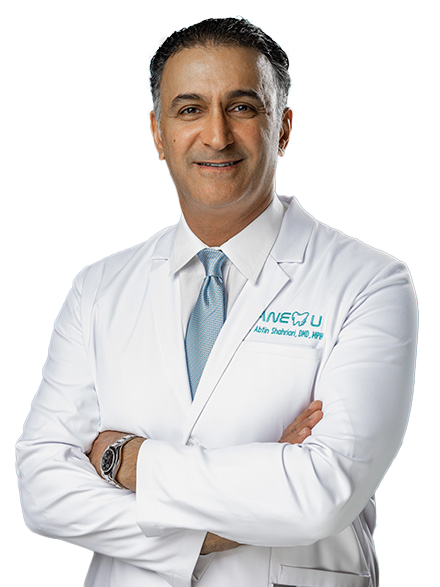
Dr. Abtin Shahriari, DMD, MPH
Dr. Abtin has performed thousands of surgeries, from zygomatic implants to complex facial reconstruction and high-risk trauma, and is the founder of Project Global Smile.
Meet Dr. AbtinFind out if zygomatic implants fit your anatomy.
A free consultation with 3D imaging will tell you plainly whether zygomatic implants, bone grafting, or another option is the right path.
Reviewed by Dr. Abtin Shahriari, oral surgeon specializing in implant dentistry. Last updated September 2026.