








Pterygoid Dental Implants in Atlanta, GA
Pterygoid implants anchor into the pterygoid plate, dense bone at the back of the upper jaw. For patients who have lost bone in the standard upper implant sites, they open up a fixed, full arch option that does not always require grafting first.
What are pterygoid implants?
Pterygoid implants are dental implants placed at an angle into the pterygoid plate, dense bone at the back of the upper jaw. They give patients who have lost bone in the standard upper implant sites a fixed, full arch option, often without a separate bone grafting procedure first.
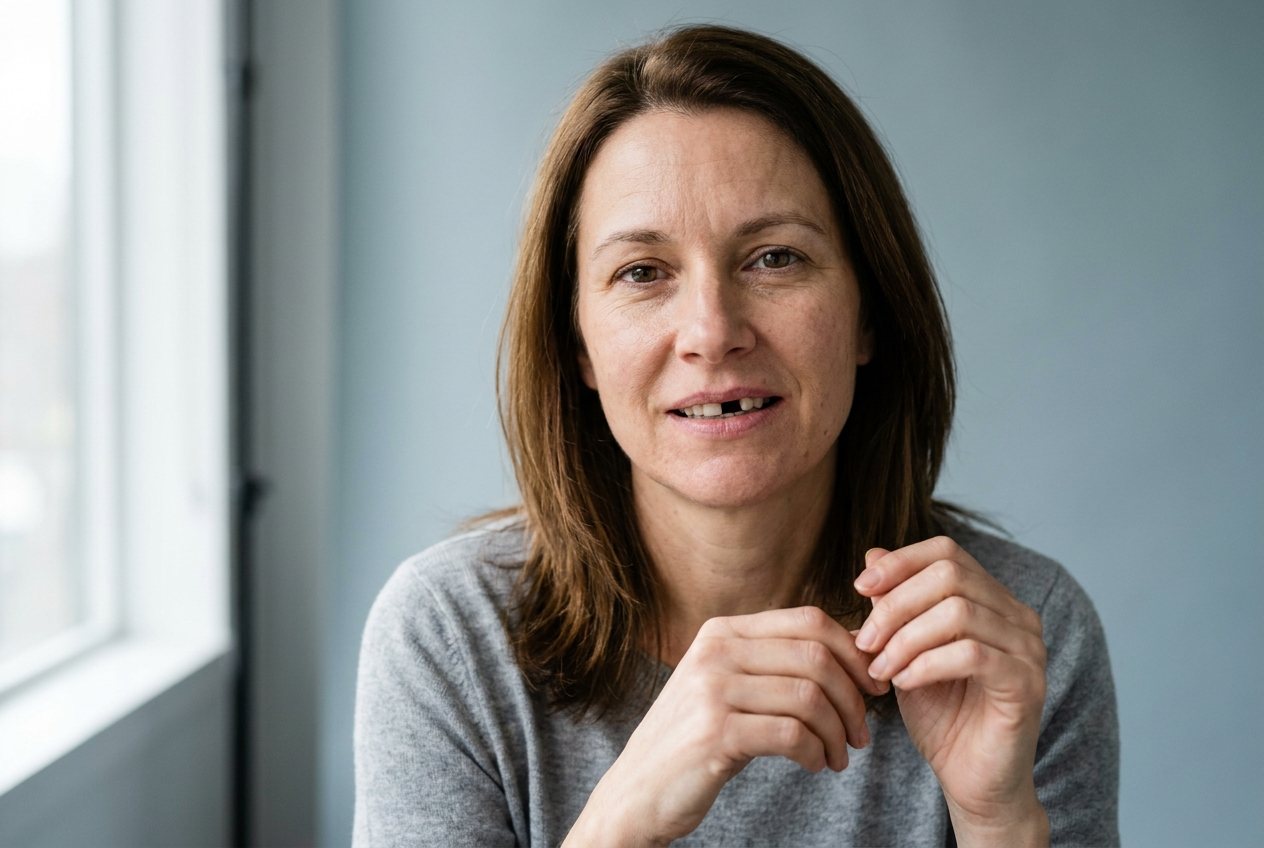
If you have ever wondered how teeth can be replaced at the very back of the upper jaw after the bone there has worn away, this is one of the answers. The upper back jaw loses height quickly once the molars are gone, and the sinus sits directly above it, so the bone a standard implant needs is often the first bone to disappear. A pterygoid implant reaches past that area entirely and takes its hold further back, in bone that has usually stayed dense.
It is a more specialized approach than a routine implant and it is used for specific patterns of bone loss, not as a default. It belongs to the same family of dental implant treatment options ANEWU plans from a 3D scan, and it is frequently combined with implants placed elsewhere in the same arch.
An anchor point where the bone is still dense.
Standard implants rely on the ridge of bone that used to hold your teeth. When that ridge has resorbed at the back of the upper jaw, an implant placed there has nothing solid to grip. The pterygoid plate sits behind and above that ridge, and it is not part of the bone lost when the molars go, so it frequently remains dense enough to hold an implant placed at the right angle.
That is the same logic behind zygomatic implants, which reach up into the cheekbone instead. The two approaches solve the same problem from different directions, and in some cases both are used in one arch. Which one your case calls for is a question about where your bone is missing, not simply how much of it is gone.
Not every upper jaw has pterygoid anatomy suited to this approach. That is what the scan is for.
Am I a candidate for pterygoid implants?
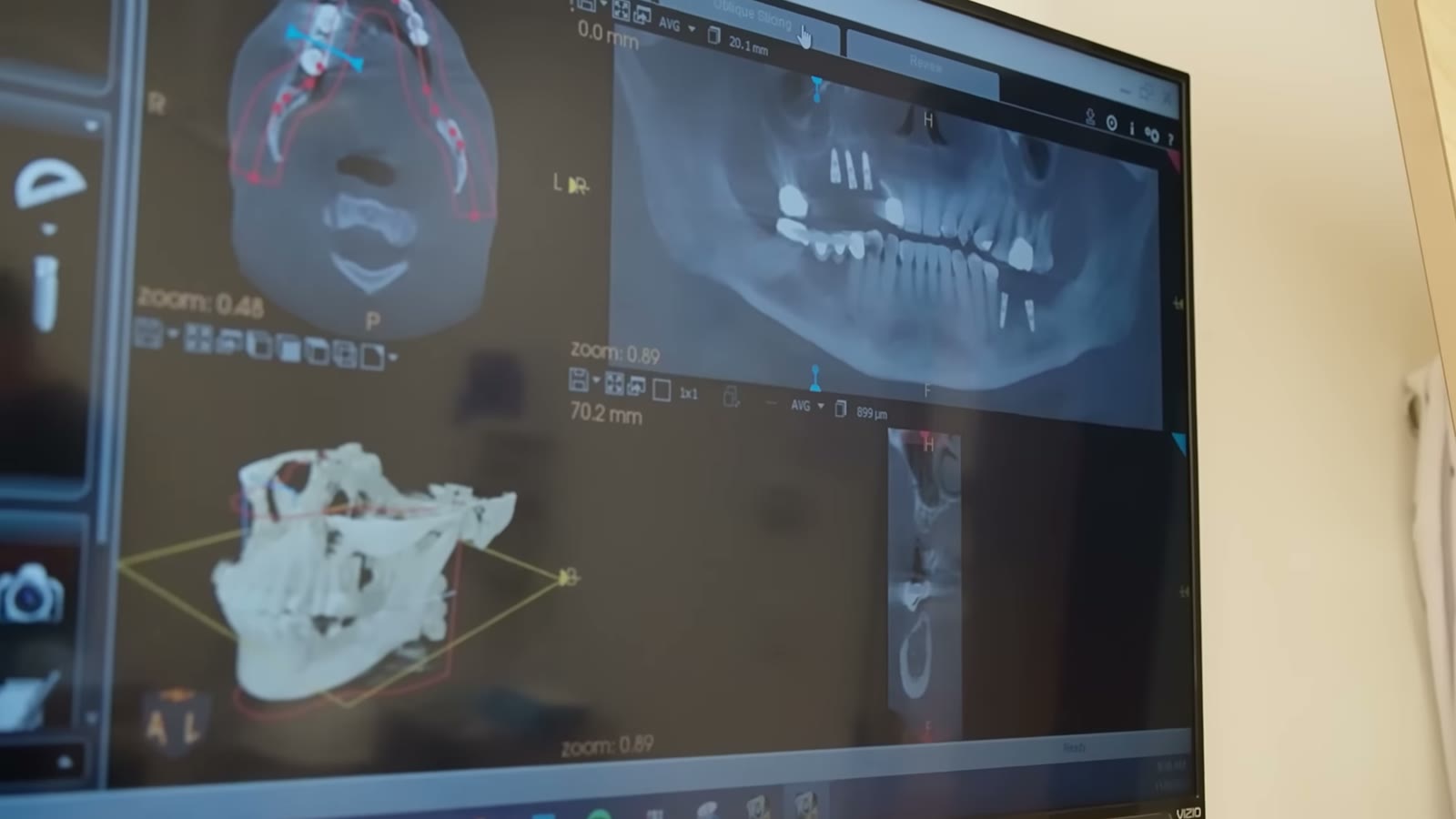
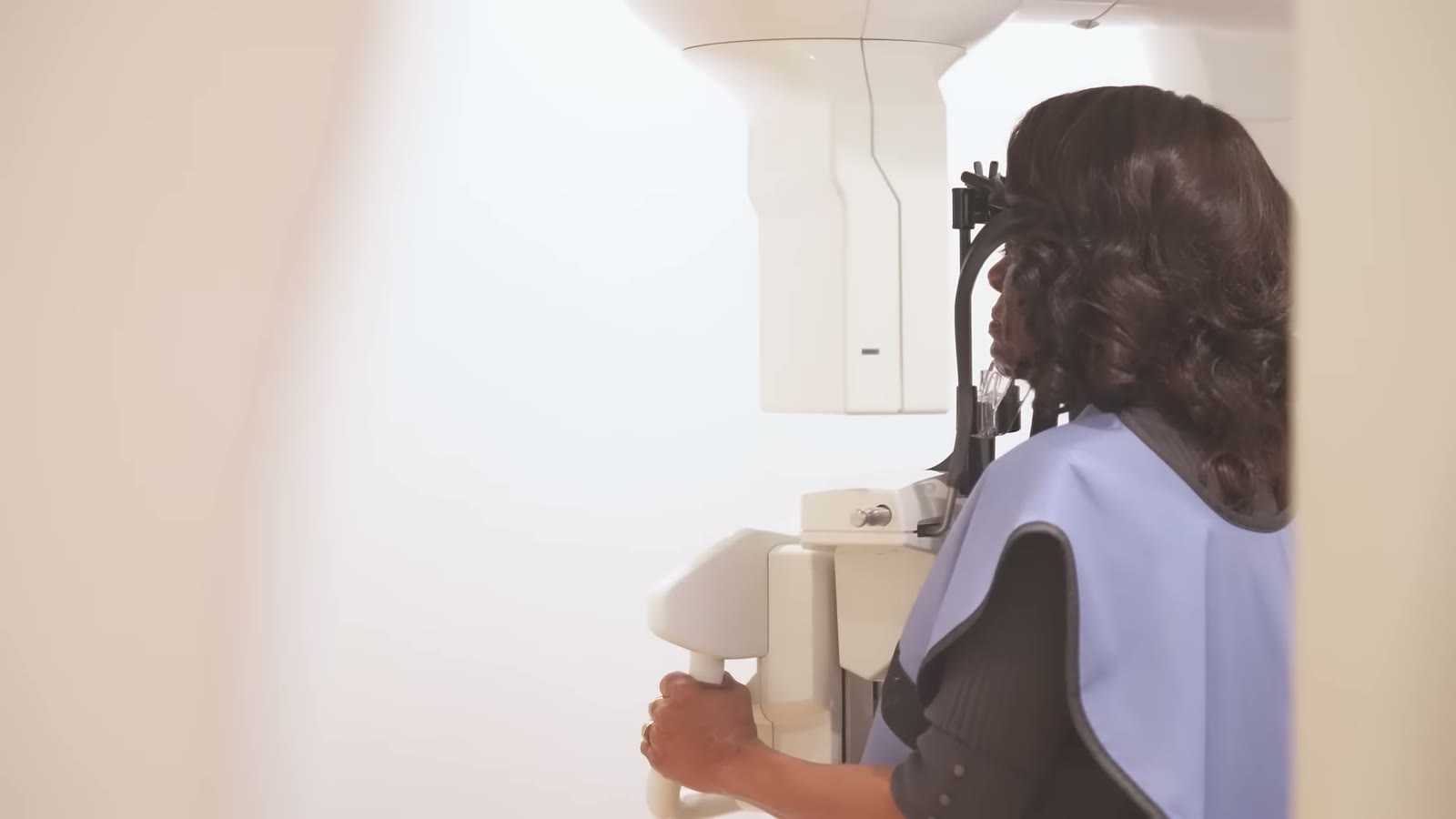
You may be a candidate if the bone at the back of your upper jaw is too limited for a standard implant and your pterygoid plate can hold one instead. ANEWU confirms that with a 3D scan at your free consultation, which also shows whether zygomatic implants suit your anatomy better.
- You have limited bone at the back of your upper jaw
- Zygomatic implants are not the right fit for your specific anatomy
- You are being evaluated for a full arch restoration and want to avoid grafting
- An implant toward the back of your upper arch has failed or is not an option
- You have been told elsewhere that you are not an implant candidate
- You are ready for 3D imaging to confirm whether your anatomy allows it
New here? Here is what to expect at your first visit, including the scan itself.
What happens during pterygoid implant surgery, step by step?
There are four stages. Your upper jaw is scanned in three dimensions, including the pterygoid plate. The implant is then placed at the angle that anchors it into that bone, usually alongside implants elsewhere in the arch. A fixed temporary bridge follows in qualifying cases, and the final bridge comes after healing.
- 01
3D imaging of the back of your jaw
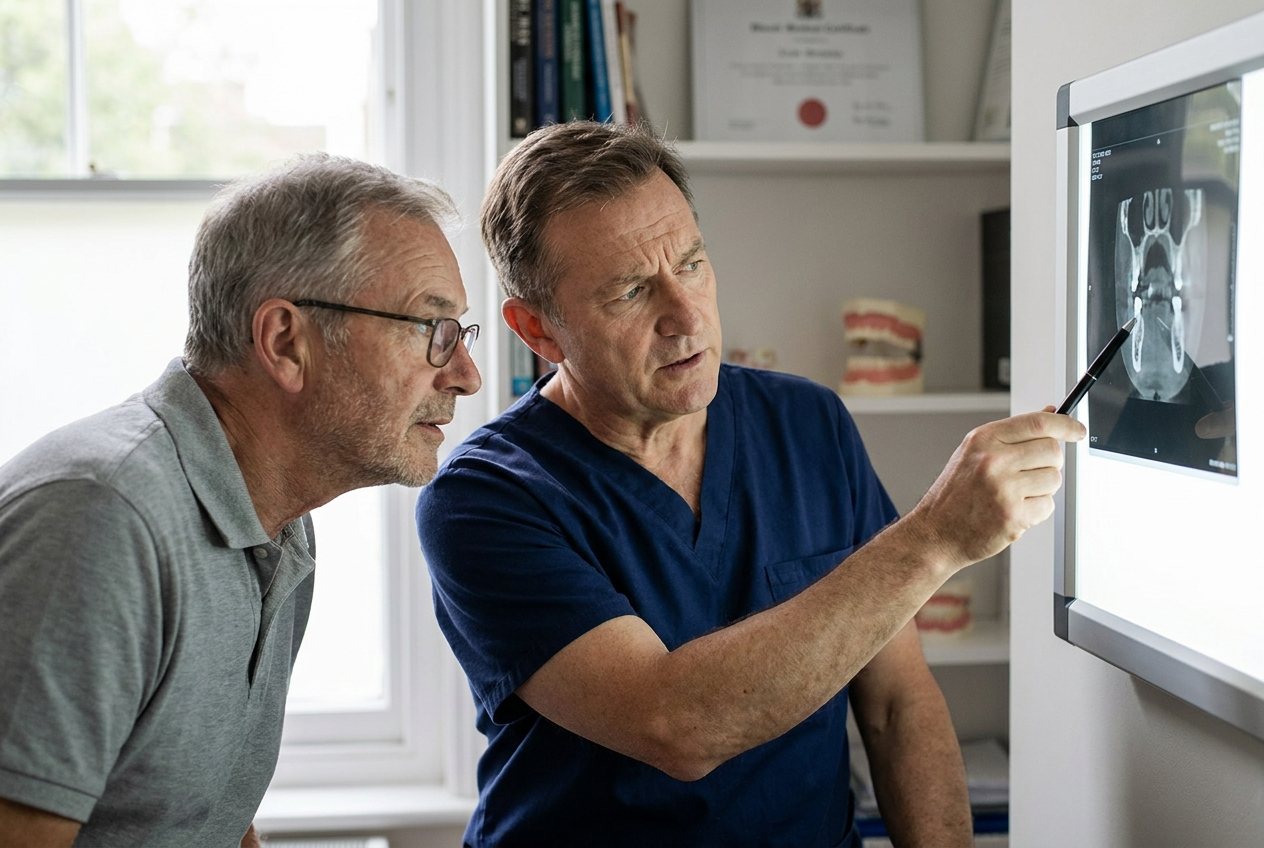
The bone at the back of your upper jaw, including the pterygoid plate, is assessed in detail. This is the same 3D imaging and guided planning used across implant cases here, and it is what determines whether a pterygoid anchor is available to you.
- 02
Surgical placement at the planned angle
The implant is placed at the angle needed to anchor securely into the pterygoid plate, most often alongside implants positioned elsewhere in the same arch so the finished bridge is supported across its whole length.
- 03
A fixed provisional bridge
In appropriate cases, a fixed temporary bridge can be attached soon after surgery, so you are not left without teeth while the final restoration is made. This is available for qualifying cases, not for every one.
- 04
Healing and your final bridge
After a healing period, the final fixed bridge is fabricated and fitted. Full arch work stays in house at ANEWU with an on site lab rather than being sent out, which keeps the adjustments close to the surgeon who placed the implants.
Two anchor points, compared honestly.
Neither approach is the automatic answer, and a surgeon should tell you plainly which one your anatomy actually calls for. Sometimes the answer is both, and sometimes it is bone grafting instead.
Pterygoid implants
- Anchors into the pterygoid plate at the back of the upper jaw
- An option when zygomatic anatomy is not the right fit
- Suited to bone loss concentrated toward the back of the arch
- Commonly combined with implants placed elsewhere in the arch
Zygomatic implants
- Anchors into the cheekbone, above the sinus
- Typically used for broader bone loss across the upper jaw
- The more frequently used of the two specialty approaches
- Also placed alongside conventional implants in the same arch
| What differs | Pterygoid implants | Zygomatic implants |
|---|---|---|
| Anchor point | Pterygoid plate, at the back of the upper jaw | Cheekbone, above the sinus |
| Bone loss pattern | Concentrated toward the back of the upper arch | Broader loss across the upper jaw |
| Grafting first | Often avoided, since the anchor bone is elsewhere | Often avoided, for the same reason |
| Usually combined with | Implants placed elsewhere in the same arch | Implants placed elsewhere in the same arch |
| Confirmed by | 3D imaging of the back of the upper jaw | 3D imaging of the cheekbone and upper jaw |
Both are performed at ANEWU, and a full arch restoration can be built on either, or on a combination of the two.
How do I replace missing teeth at the back of my upper jaw?
Three routes are common once the back of the upper jaw has lost bone. Bone grafting rebuilds the ridge so standard implants can follow. Pterygoid implants anchor behind that area in the pterygoid plate. Zygomatic implants anchor above the sinus in the cheekbone. A 3D scan shows which your anatomy allows.
If you have ever wondered why one office tells you implants are impossible and another says they are not, this is usually where the disagreement sits. A flat x-ray shows the ridge and little else, so a surgeon reading only that film sees missing bone and stops there. A three dimensional picture shows what is still available behind and above the gap, which is exactly the bone these two approaches are built to use.
Grafting is still a legitimate path and is sometimes the better one, particularly when you want implants placed in the conventional positions. It simply adds months to the timeline, because the graft has to mature before implants go in. Pterygoid and zygomatic anchors can shorten that by working with bone you already have.
Your surgeon will assess which of the three applies with a 3D scan at your consultation.
How much do pterygoid implants cost in Atlanta?
Cost depends on how many implants your case needs, whether pterygoid implants are combined with implants elsewhere in the arch, and which restoration is used. Dental insurance typically does not cover implant treatment. ANEWU accepts CareCredit and Proceed Finance and can arrange a monthly payment plan before your procedure.
Why there is no single price for a pterygoid case
A pterygoid implant is rarely a standalone procedure. It is usually one part of rebuilding an entire upper arch, so the number that matters is the cost of the finished result, not of the one implant. Two people with the same missing teeth can need different implant counts, different restorations, and different amounts of preparatory work. That is why a figure quoted before a scan is not worth much.
Insurance, CareCredit and Proceed Finance
Dental insurance typically treats implant treatment as outside its coverage, and where it does contribute, it is usually toward part of the restoration rather than the surgery. ANEWU works with CareCredit and Proceed Finance, and accepts Visa, MasterCard and Discover. You can review the implant financing options before your consultation so the conversation about money happens with real numbers in front of you.
Where is this treatment performed?
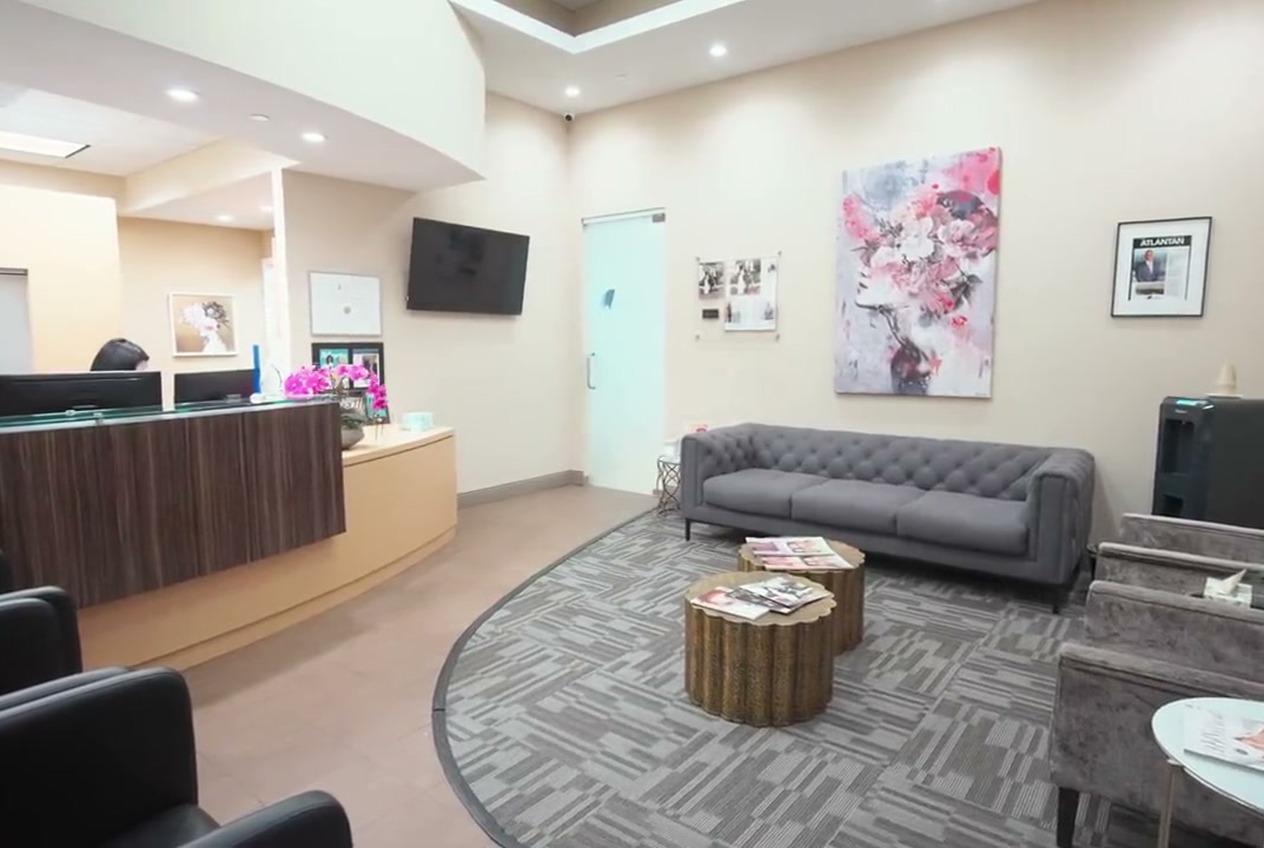
Implant surgery is performed at all three ANEWU offices in Georgia. Patients north of Atlanta most often use the Cumming or Dawsonville offices, both just off the GA-400 corridor, while the Buckhead office serves patients inside the perimeter. Records move between offices, so follow up can happen at whichever address is closer.
More questions, answered.
Short answers to what comes up most at a consultation about pterygoid implants.
Ask us directlyBoth are used when there isn't enough standard bone for a traditional implant, but they anchor in different places. Zygomatic implants anchor in the cheekbone, while pterygoid implants anchor into the pterygoid plate at the back of the upper jaw.
It comes down to your specific anatomy. Some patients' bone loss or jaw structure fits a zygomatic approach better, while others are better suited to a pterygoid anchor, and sometimes both are used together. A 3D scan will show which fits your case.
Often, yes. Because pterygoid implants anchor in different bone than the area that's been lost, many patients can move forward without a separate grafting procedure. Your imaging will confirm whether that applies to you.
Sometimes they're combined with implants placed elsewhere in the arch, including zygomatic implants, to support a complete, fixed restoration. Dr. Abtin will lay out the specific plan for your case.
Who performs pterygoid implant surgery at ANEWU?
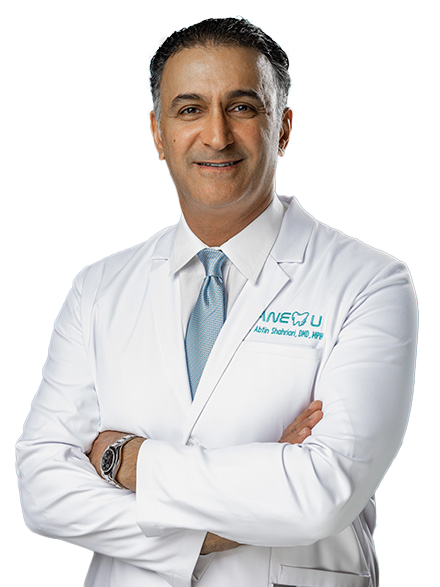
Dr. Abtin Shahriari, an oral surgeon specializing in implant dentistry, plans and performs pterygoid implant cases at ANEWU. He holds a DMD and an MPH, completed 8 years of specialty training including the University of Pennsylvania and Emory University, and has performed thousands of surgeries across the three Georgia offices.
Dr. Abtin Shahriari, DMD, MPH
Pterygoid and zygomatic cases sit at the more advanced end of implant surgery, and they are the kind of case Dr. Abtin Shahriari trained for. He is the founder of Project Global Smile, and full arch work stays in house here with an on site lab rather than being referred out.
Meet the ANEWU teamFind out whether pterygoid implants fit your anatomy.
A free consultation includes the 3D scan that answers it, and a plan you can look at on screen before deciding anything.
Reviewed by Dr. Abtin Shahriari, oral surgeon specializing in implant dentistry. Last updated September 2026.