










Short answer
A smile makeover is a plan, not one procedure. It combines two or more cosmetic treatments, such as whitening, bonding, veneers, crowns and clear aligners, in a set order. ANEWU says a plan of only whitening and bonding might finish in a few weeks, while one that starts with aligners can take several months. Active decay or gum disease is treated first.
What does a smile makeover include?
A smile makeover includes whichever cosmetic treatments your goals call for, combined into one sequenced plan. At ANEWU that can mean porcelain veneers, dental bonding, professional teeth whitening, dental crowns and clear aligners, from two of them to all five. Your exam decides which belong in your plan, not a fixed package.
Cleveland Clinic describes cosmetic dentistry as the branch of dentistry focused on improving the appearance of your smile. As ANEWU uses the term, a makeover is the version where several treatments are planned together instead of booked one at a time. The American Academy of Cosmetic Dentistry says esthetic dentistry must complement the overall general and oral health of the patient and do no harm, and that its member dentists provide minimally invasive treatment when and where appropriate. That is why two people who both want a better smile can leave with different plans. One may need alignment corrected first. Another may need worn edges rebuilt and the color evened out.
What does each part of a smile makeover solve?
Each treatment solves a different problem. Whitening changes shade, bonding repairs small chips and gaps, veneers change shape and shade together, crowns rebuild weakened teeth, aligners move teeth, gum contouring reshapes the gum line, and implants replace missing teeth. Most plans use only some of them, and ANEWU's makeover page does not list gum contouring.
Cleveland Clinic lists gum contouring among common cosmetic services. ANEWU's smile makeover page names five treatments: veneers, bonding, whitening, crowns and clear aligners. Implants are a separate surgical service at ANEWU, covered below. If gum reshaping matters to you, ask at the consultation whether it fits your plan. Visit counts and timings in the table come from ANEWU's service pages.
| Treatment | What it solves | Typical visits or time | Keep in mind |
|---|---|---|---|
| Teeth whitening | Yellowing or stain on natural teeth | One visit of about an hour, or take-home trays over 1 to 2 weeks | Does not change crowns, veneers or fillings |
| Dental bonding | A small chip, gap or worn edge | Usually one visit | Stains more easily than porcelain; Cleveland Clinic gives 5 to 8 years, ANEWU 3 to 10 |
| Porcelain veneers | Shape, shade, small gaps and chips together | Typically two visits, with temporaries between | Enamel is reshaped, so it cannot be undone |
| Dental crowns | A tooth weakened by a crack, large filling or wear | Typically two visits | Covers the whole tooth, so it is used when structure is lost |
| Clear aligners | Crowding, spacing or rotation | Most cases 6 to 18 months | Finishes before shade and shape are set |
| Gum contouring | A gummy or uneven gum line | Varies | Not on ANEWU's makeover page; ask if it is offered |
| Dental implants | One or more missing teeth | Planned from a 3D scan | A surgical step, planned separately |
How is a smile makeover plan built?
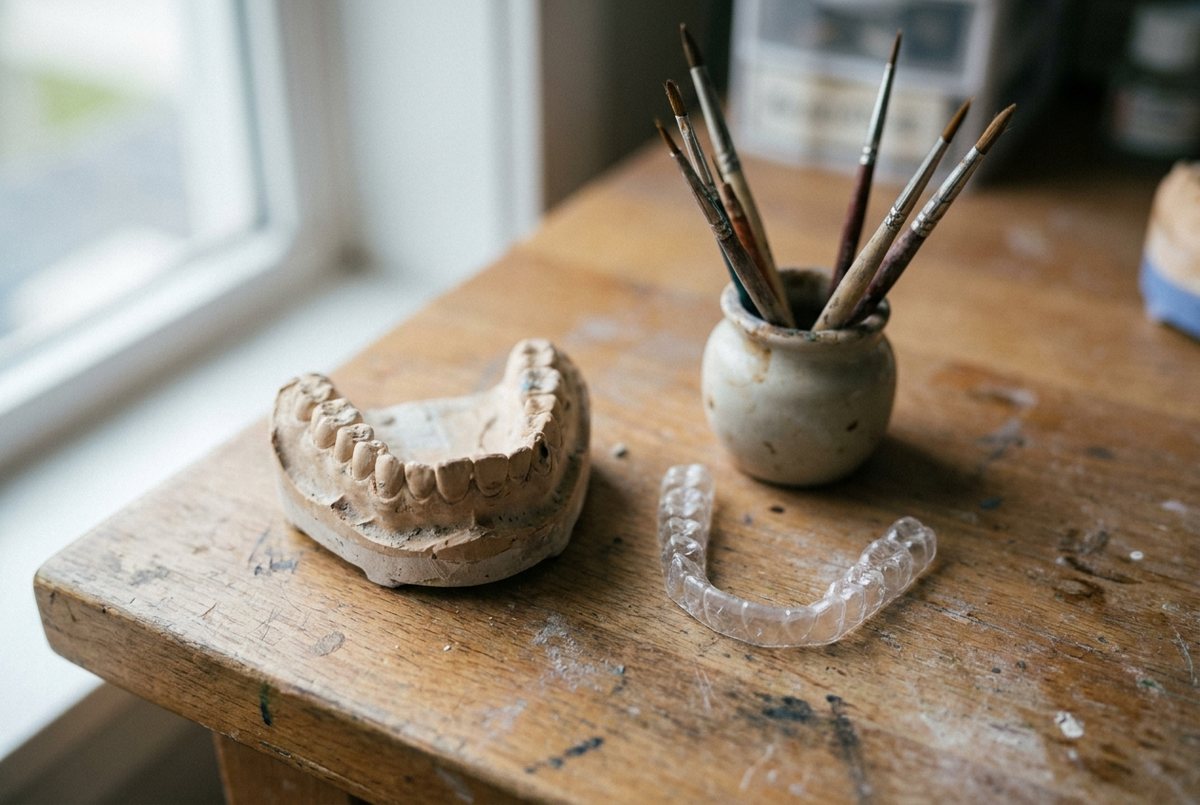
A plan is built from an exam, your goals and, at ANEWU, digital scans, then sequenced so each step prepares for the next. Alignment comes first when it is needed, then whitening, then any veneers, bonding or crowns are finished to match the final shade and position of your teeth.
At ANEWU, the cosmetic dentistry team starts by listening to what you would change, from color and shape to spacing and wear. They examine your teeth and map which treatments address each concern and in what order. Digital scans are used to plan shade and shape against where your teeth will finish, and for veneers you see how new edges sit against your lip line before any enamel is touched.
The order has practical reasons. Veneers, bonding and crowns do not lighten later, so ANEWU's pages put whitening first and match new work to the shade you land on. Timing matters too: a 2021 meta-analysis of 52 in vitro studies found that vital bleaching, meaning whitening of living teeth, impaired the bond strength of adhesive systems to enamel and dentin, and that the effect was no longer significant when bonding was tested two and three weeks later. Lab studies are not patients, so treat two weeks as a planning clue, not a rule, and ask your dentist how they space whitening and bonded work.
How long does a smile makeover take?
It takes from a few weeks to several months, depending on the treatments in your plan. ANEWU says a plan built only from bonding and whitening might finish in a few weeks, while one that starts with clear aligners can take several months before the finishing touches are added.
At ANEWU, in-office whitening is one visit of about an hour, and take-home trays work over one to two weeks. Bonding is usually one visit. Veneers and crowns typically run over two visits, with temporaries in between while the lab makes the final pieces. Clear aligners are the long step: ANEWU says most clear aligner cases take 6 to 18 months, depending on how far your teeth need to move.
Two things can lengthen a plan. One is anything that has to come first, such as treating decay or gum disease. The other is how far your teeth must move: ANEWU says aligner time depends on that and on wearing the trays for the recommended hours each day. A 2025 modified Delphi consensus of 23 international orthodontic experts agreed that aligners work in some cases, such as mild or moderate crowding, but did not reach agreement on treatment duration, so ask for a range for your own teeth.
Teeth also need holding in place afterward. The 2023 Cochrane review of retainers, which covered 47 trials, opens by noting that without retention teeth tend to relapse. It excluded studies of aligners, though, and rated its evidence low or very low certainty, so it cannot support firm conclusions about any one retention approach.
Can a smile makeover include dental implants?
Yes in general: implants can replace missing teeth as part of a wider plan. At ANEWU they are a separate surgical service, not one of the five treatments on the makeover page, and missing teeth are replaced with a single implant, an implant bridge or a fixed full arch, depending on how many teeth are gone and how much bone remains.
Implants have long-term data behind them. A 2019 systematic review of 18 prospective studies estimated 10-year survival at the implant level of 96.4% (95% CI 95.2% to 97.5%). A more cautious sensitivity analysis that accounted for patients lost to follow-up put it at 93.2%, and found older age (65 or over) was a significant predictor, which the authors described as a possible doubling of the risk of implant loss in older age groups. Survival means the implant stayed in place, not that no maintenance was needed.
Implants are planned from a 3D scan, separately from the cosmetic steps. Dr. Abtin Shahriari, an oral surgeon specializing in implant dentistry, performs the implant exam and reviews your 3D scan at ANEWU. Our implant services overview explains the options.
Who is not ready for a smile makeover yet?
You are not ready if you have untreated decay or gum disease. The American Dental Association says a dentist must first treat issues like these before veneers, because placing veneers over unhealthy teeth may worsen existing dental problems. Grinding, a deep overbite or teeth that need to travel a long way can also change which treatments suit you.
Other situations change the plan rather than stop it. The American Dental Association says veneers may not be a good choice if you clench or grind your teeth or have a deep overbite, and that a veneer may chip, crack, wear down or loosen over time. ANEWU says severe crowding, a significant bite discrepancy or teeth that must travel a long way are usually handled with braces rather than aligners.
Existing dental work matters too. The American Dental Association says whitening will not work on caps, veneers, crowns or fillings, and that yellow teeth probably bleach well while brown teeth may respond less and gray-toned teeth may not bleach at all. Tell the team about existing restorations before you start.
What do dentists recommend instead of veneers?
It depends on the problem. Whitening suits stain on well-shaped teeth, bonding suits one or two small chips or gaps, clear aligners suit crowding or rotation, and crowns suit teeth that have lost structure. Composite veneers are a lighter version that may need less enamel removed and fewer visits, but they resist stain and wear less well.
The reason to look at alternatives is that porcelain veneers cannot be undone: the American Dental Association says treatment is not reversible because enamel is removed. The American Academy of Cosmetic Dentistry says its members favor minimally invasive protocols when and where appropriate, so the least invasive option that meets your goal is a fair starting point. For whitening, a 2025 updated meta-analysis found no difference between at-home and in-office bleaching in sensitivity risk or shade-guide change, though the evidence was low quality.
Veneers have real evidence behind them, with limits. A 2021 systematic review of porcelain laminate veneers found that studies of 10 to 12 years reported survival from 53% to 94.4%, and that a conclusive estimate beyond 20 years is lacking. For bonding, a 2021 systematic review of 25 studies and 75,637 direct anterior composite restorations found annual failure rates from 0% to 27.11%, with fracture the main cause, so a wide range is the honest answer.
For crowns, a 2026 meta-analysis of 64 studies of tooth-supported single crowns found five-year survival of 97.1% for metal-ceramic and 98.5% for monolithic lithium-disilicate crowns, but 90.4% for feldspathic or silica-based ceramic. The material matters, so ask which one is planned for your teeth.
How much does a smile makeover cost?
There is no single price, because the total depends on which treatments your plan uses and how many teeth are involved. ANEWU does not post prices and gives you a written plan with its cost before anything begins. Insurance often does not cover cosmetic work, and ANEWU accepts CareCredit and Proceed Finance and can arrange a monthly payment plan.
A makeover costs more than a single procedure because it combines several, and one request can mean two treatments or five. The American Dental Association says porcelain veneers tend to be the more expensive option compared with composite veneers, and that veneers may not be covered by insurance unless medically necessary. Cleveland Clinic says insurance usually does not cover cosmetic dentistry. ANEWU's pages note that some plans treat repairs differently, such as bonding after an injury or a medically necessary crown, so ask the billing team to check yours.
What does this look like at ANEWU?
At ANEWU, a smile makeover starts with a free consultation in Buckhead, Cumming or Dawsonville. You tell the cosmetic dentistry team what you would change, they examine your teeth, and they map which treatments address each concern and in what order. You get a written plan with its cost before anything begins.
Bring photos of smiles you like, your insurance card, a list of what bothers you and any past dental records. You can fill out new patient forms before you arrive, and our guide on what to expect at your first visit walks through the appointment. ANEWU's cosmetic dentistry team plans and provides the makeover treatments, at three Georgia offices open Monday to Saturday. There is no pressure to decide at the visit. If you are weighing a makeover, you can book a free consultation. Whichever office you choose, compare what is inside each plan, not only the total, and ask these questions:
- Do I have any decay or gum disease that must be treated before cosmetic work starts?
- Which steps can be undone, and which cannot?
- In what order will the treatments happen, and how long is each stage?
- What material is used for each veneer or crown, and what happens if one chips?
- What does the written cost include, such as temporaries and follow-up visits?
- Can I see how the new shape will sit against my lip line before enamel is reshaped?
Sources and further reading
- Veneers American Dental Association, MouthHealthy patient page, accessed October 2026
- Teeth Whitening American Dental Association, MouthHealthy patient page, accessed October 2026
- About the AACD American Academy of Cosmetic Dentistry, accessed October 2026
- Cosmetic Dentistry: Enhancing the Appearance of Your Smile Cleveland Clinic, patient page last updated 11/06/2024
- Survival Rates for Porcelain Laminate Veneers: A Systematic Review European Journal of Dentistry, 2021
- Vital Bleaching Influences the Bond Strength of Adhesive Systems to Enamel and Dentin: A Systematic Review and Meta-Analysis of In Vitro Studies Operative Dentistry, 2021
- At-home vs In-office Bleaching: An Updated Systematic Review and Meta-analysis Operative Dentistry, 2025
- Long-term survival and reasons for failure in direct anterior composite restorations: A systematic review Journal of Conservative Dentistry, 2021
- A Systematic Review and Meta-analysis Evaluating the Survival, Failure, and Complication Rates of Metal-Ceramic, Veneered, and Monolithic All-Ceramic Tooth-Supported Single Crowns-Part 1 International Journal of Prosthodontics, 2026
- Indications and limits of clear aligner therapy: an international modified Delphi consensus study Progress in Orthodontics, 2025
- Retention procedures for stabilising tooth position after treatment with orthodontic braces Cochrane Database of Systematic Reviews, 2023
- Long-term (10-year) dental implant survival: A systematic review and sensitivity meta-analysis Journal of Dentistry, 2019
This article is general information about dental and facial procedures, not a diagnosis or medical advice. Every jaw and every health history is different, so the right plan for you can only be set after an exam and imaging with a surgeon.