











Short answer
Choose a crown when a tooth is heavily broken, cracked, decayed or root-canal-treated with much of its structure lost, because it wraps the whole tooth. Choose a veneer when the front surface needs a cosmetic change and the tooth is otherwise sound. Choose bonding for a small chip, a small gap or an edge that needs reshaping, especially if you want little or no enamel removed. A dentist confirms which fits your tooth.
What is the difference between veneers, crowns and bonding?
A crown covers the whole tooth, a veneer covers only the front surface, and bonding adds tooth-colored resin only where the tooth needs it. The American Dental Association says veneers cover only the front surface of a tooth rather than the entire tooth structure. The three differ most in how much tooth is removed, how long they last and whether they can be undone.
The table puts the three side by side. The tooth-removal figures come from a 2002 lab study on resin teeth, so treat them as a rough guide. Durability figures for veneers and crowns are survival, meaning the restoration was still in place at follow-up, from a 2021 review of 25 studies and a 2026 review. Bonding is measured differently: Cleveland Clinic gives a span before a touch-up or replacement is typically needed. Do not compare the durability cells directly.
- Crown: the tooth is heavily broken, cracked, decayed or root-canal-treated with much of its structure lost.
- Veneer: the front surface needs a cosmetic change and the tooth is otherwise sound.
- Bonding: a small chip, a small gap or an edge that needs reshaping, or reversibility and cost matter most.
- Treat first: decay, gum disease and teeth well out of line come before any of the three.
| What to compare | Porcelain veneer | Crown | Composite bonding |
|---|---|---|---|
| Coverage | Front surface only | Whole tooth | Only the chipped, gapped or worn area |
| Tooth removed | About 3% to 30% (ceramic veneers and resin-bonded retainers, 2002 study on resin teeth) | About 63% to 72% (same 2002 study on resin teeth) | Little or none |
| Durability in studies | 95.5% in place at 10 years (2021 review) | 97.1% metal-ceramic and 96.8% monolithic zirconia at 5 years (2026 review) | Typically 3 to 10 years before a touch-up or replacement (Cleveland Clinic) |
| Can it be undone? | No, enamel is removed | No, some enamel is removed | Usually yes |
| If it is damaged | Re-bonded, repaired or replaced | Replaced when worn or damaged | Touched up or replaced |
| Stain resistance | Better than resin, but caution with coffee, tea and red wine | Porcelain resists stains better than resin (Cleveland Clinic); ask which material is planned | Stains more easily than porcelain |
| Visits at ANEWU | Typically two | Typically two | Usually one |
| Suited to | A cosmetic change on an otherwise sound front surface | A heavily broken, cracked or decayed tooth, or a root-canal-treated tooth that has lost much structure | Small chips, small gaps, edge reshaping, or when reversibility or cost matters |
When do you need a crown instead of a veneer?
A crown is usually suited to a tooth that has lost structure from a large break, a crack, extensive decay, a big filling or a root canal. A crown wraps and holds the whole tooth together. A veneer covers only the front surface, so it suits a tooth that is otherwise sound.
The American Dental Association says a crown can strengthen a tooth with a large filling when there is not enough tooth left to hold the filling, protect a weak tooth from breaking and restore one that is already broken. Cleveland Clinic also lists covering a root canal-treated tooth among the reasons. For root canal teeth the evidence is thin: a 2025 systematic review of five studies found crowns and bonded composite both did well in the short term, but over about 8 to 10 years crowned teeth generally survived better, especially when a lot of tooth structure was lost.
The same review found that teeth with one to three surfaces lost and intact walls did well with bonded composite, while teeth with four to five surfaces lost benefited from cuspal coverage, which a crown provides. The trade-off is tooth removal. In the 2002 lab study, preparing resin teeth for crowns removed about 63% to 72% of the coronal tooth structure by weight, against about 3% to 30% for ceramic veneers and resin-bonded retainers. ANEWU's crowns page lists a cracked tooth, a heavily filled tooth and a root canal as signs a crown may be needed.
What are dental crowns made of, and how do the materials compare?
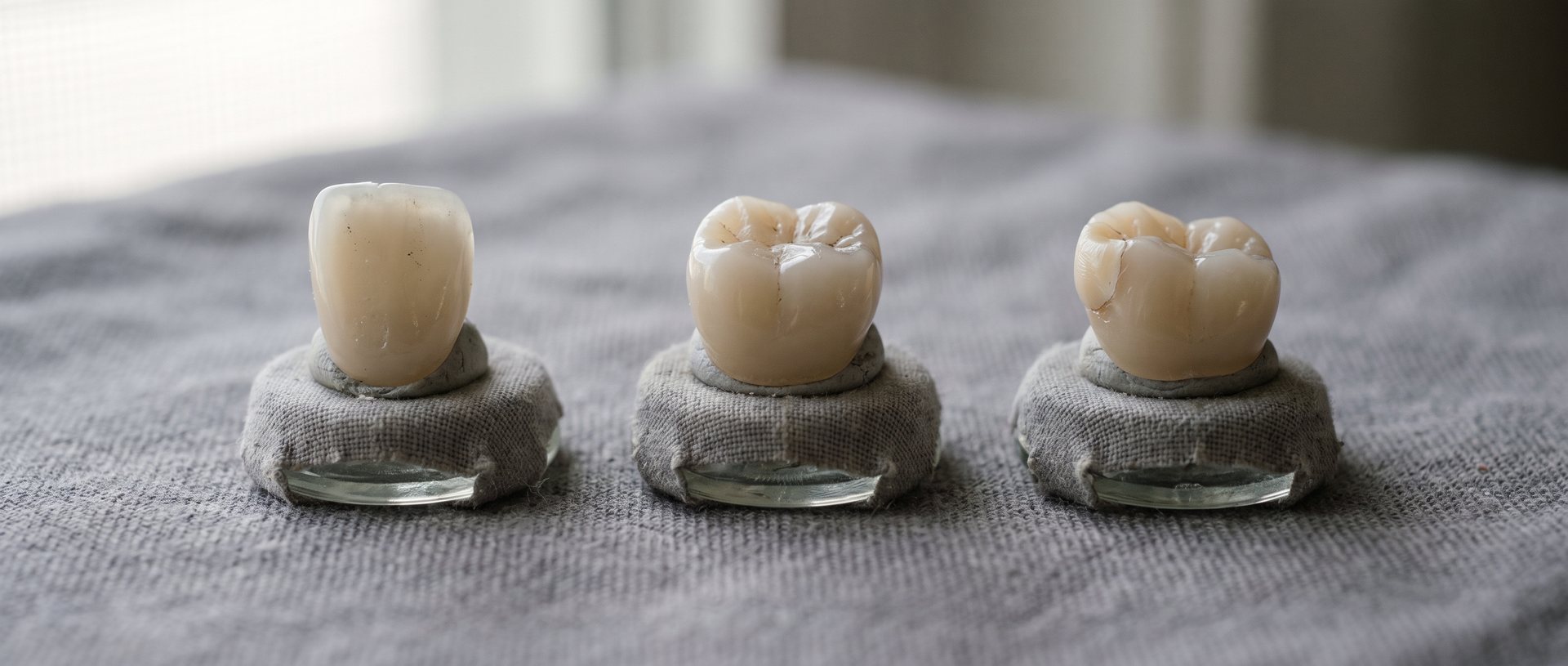
Crowns are made of metal alloys, porcelain-fused-to-metal, or all-ceramic materials such as zirconia, and some are made of resin. Cleveland Clinic says metal crowns rarely chip or break, but their metallic color is the main drawback. A 2026 review found five-year survival of about 97% for both metal-ceramic and monolithic zirconia crowns.
That 2026 meta-analysis of 64 studies covered 3,509 metal-ceramic and 8,051 all-ceramic crowns. Five-year survival was 98.5% for monolithic lithium-disilicate glass-ceramic, 97.3% for veneered zirconia, 97.1% for metal-ceramic, 96.8% for monolithic zirconia and 90.4% for feldspathic ceramic. The authors concluded that lithium-disilicate and zirconia crowns reach five-year survival comparable to metal-ceramic crowns, and that monolithic designs, made from one material, showed fewer ceramic fractures and less chipping than veneered ones.
Each material has a downside. Cleveland Clinic says the porcelain on a porcelain-fused-to-metal crown may chip off over time, exposing the metal, and that the metallic color is the main drawback of metal crowns. It describes zirconia as durable and gentle on opposing teeth, and resin crowns as fragile and more likely to break. It puts the average lifespan of a crown at five to 15 years with proper care; that is its general figure, while the 2026 review reports five-year survival. Ask which material is planned for your tooth and why.
Why do dentists advise against veneers?
Dentists advise against veneers when the tooth or mouth is a poor fit, because the treatment cannot be undone. The American Dental Association says enamel is removed, any decay or gum disease must be treated first, and veneers may not be a good choice if you clench or grind your teeth or have a deep overbite. A veneer can also chip, crack or loosen.
Studies put numbers on that. A 2021 systematic review of 25 studies and 6,500 porcelain veneers estimated 95.5% cumulative survival at 10 years, with fracture the most common complication, followed by debonding. A 2025 meta-analysis of 29 studies found pooled survival of 93.7% to 96.8% at about 10 years in its long-term studies, depending on the ceramic, with fewer complications for lithium disilicate than for feldspathic porcelain. These are pooled results from published clinical series, not a prediction for your teeth.
Grinding needs a straight answer. A 2018 systematic review linked sleep bruxism to more failures of anterior ceramic veneers (hazard ratio 7.74, 95% confidence interval 2.50 to 23.95), yet its pooled result across all ceramic restorations showed no clear link, and the authors rated the overall evidence very low quality. The ADA also says you can still get cavities under or around a veneer, so cleaning between your teeth daily and keeping checkups matters. ANEWU's veneers page notes that reshaping enamel is not reversible, so take the decision slowly.
What are the downsides of composite bonding?
Composite bonding is less durable and less stain-resistant than porcelain. Cleveland Clinic says it doesn't resist stains as well as porcelain restorations, can chip over time, and typically lasts between three and 10 years before a touch-up or replacement. It is suited to small changes: for more dramatic changes, other treatments may be needed.
A 2015 systematic review of anterior composite restorations (17 studies, 1,821 restorations, follow-up of at least three years) reported annual failure rates from 0 to 4.1% and survival from 53.4% to 100%, so results vary widely. The review covered front-tooth fillings, restorations placed for appearance and restorations on worn teeth, not only cosmetic bonding, and the three to 10 year span above is Cleveland Clinic's general figure, not a pooled result from this review. Fracture of the tooth or restoration was the most common reason for failure, and failures related to color, shape or surface stain were more frequent when the restoration was placed for appearance.
Bonding also depends on the tooth underneath. ANEWU's bonding page says that if a large portion of the tooth is missing, or the tooth is weak from a crack or an old restoration, resin cannot carry the bite on its own and a porcelain crown is the more durable repair. It also notes that whitening gel does not lighten composite, so whiten first. Cleveland Clinic advises avoiding nail biting, chewing pens and opening packages with your teeth, and describes bonding as among the less costly cosmetic procedures. Bonding is usually reversible too, which matters if you are not ready to commit.
What does this look like at ANEWU?
ANEWU's cosmetic dentistry team plans veneers, crowns and bonding, and the free consultation is where the team confirms which one your tooth needs. Veneers and crowns usually take two visits with a temporary in between, while bonding is usually finished in one visit with nothing sent to a lab. Offices are in Buckhead, Cumming and Dawsonville.
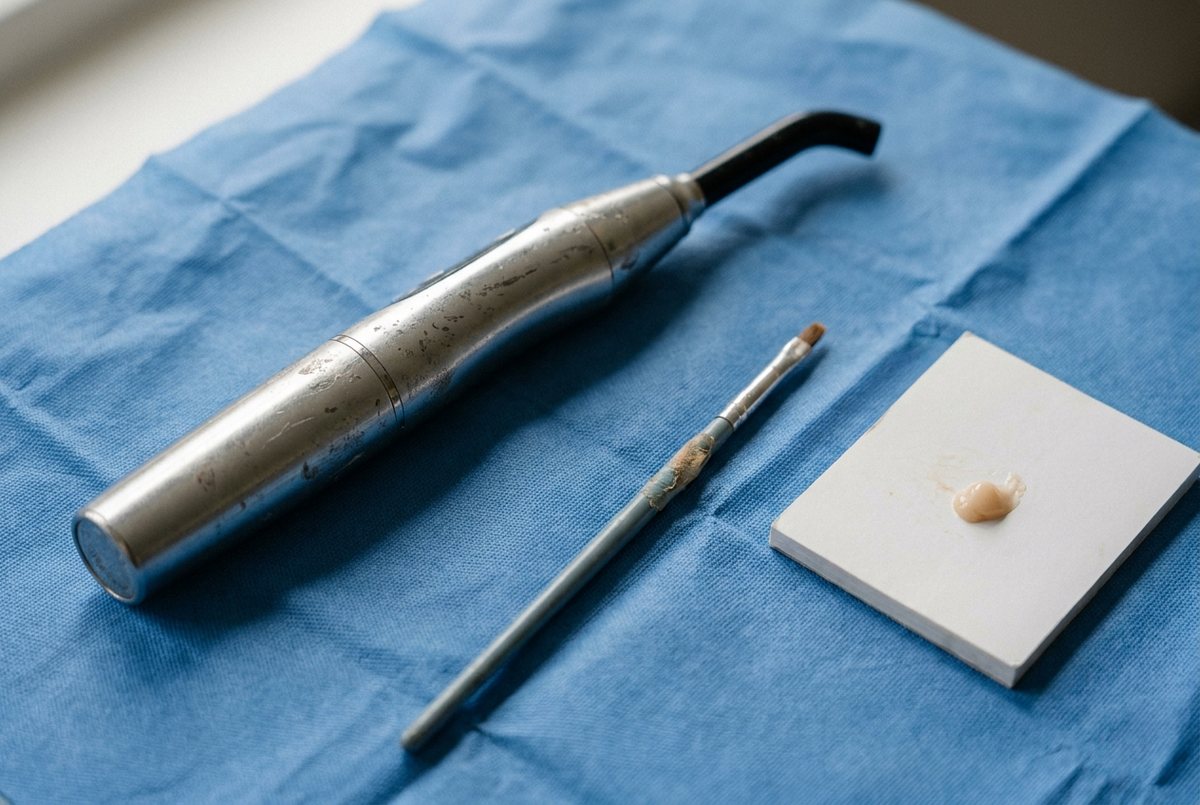
For veneers, shade, shape and length are agreed before any enamel is reshaped, and professional whitening belongs before the shade is chosen because porcelain does not lighten later. For crowns, the team uses digital imaging to confirm a crown is the right fix and to check for hidden decay, and it does not quote a crown before seeing the tooth. Bonding is shaped by hand in the chair and hardened with a curing light, and a chip too large for resin is a case for a crown.
Veneers are cosmetic, not orthodontic. Teeth well out of line are moved with clear aligners first, and decay or gum disease is treated before any veneer. If you want several changes at once, a smile makeover sequences them, with aligners first when needed, then whitening, then veneers, bonding or crowns. The first visit is a free consultation: nothing is drilled or placed, and you are not asked to decide on the spot.
What should you ask before choosing?
Ask what is wrong with the tooth, what happens if you wait, how much enamel each option removes, and what a repair or replacement would involve. A sound plan explains the alternatives and the downsides in plain language. At ANEWU the consultation is free, and cost is quoted after a consultation rather than from a list.
Insurance often treats cosmetic work differently from repairs. The American Dental Association notes a veneer may not be covered unless it is deemed medically necessary. ANEWU says insurance typically does not cover veneers, sometimes contributes to a crown when it is medically necessary, and usually does not cover cosmetic-only bonding. CareCredit and Proceed Finance are accepted, and a monthly payment plan can be set up before treatment. If you are weighing the three, book a free consultation and bring your questions, and read what to expect at your first visit beforehand.
- What exactly is wrong with this tooth, and is there enough healthy tooth left to hold a repair?
- How much enamel will each option remove, and can it be undone?
- Do I grind or clench my teeth, and do I need a night guard to protect the work?
- Is any decay, gum disease or crooked alignment treated first?
- Which material is planned, and why?
- What would a repair or replacement involve later, and what would it cost me?
- What will insurance and financing cover?
Sources and further reading
- Veneers American Dental Association, MouthHealthy patient information page, accessed October 2026
- Crowns American Dental Association, MouthHealthy patient information page, accessed October 2026
- Dental Crowns Cleveland Clinic, patient information page, last updated April 2023, accessed October 2026
- Dental Bonding & What To Expect Cleveland Clinic, patient information page, last updated January 2026, accessed October 2026
- Long-Term Survival and Complication Rates of Porcelain Laminate Veneers in Clinical Studies: A Systematic Review Journal of Clinical Medicine, 2021
- Survival and Complication Rates of Feldspathic, Leucite-Reinforced, Lithium Disilicate and Zirconia Ceramic Laminate Veneers: A Systematic Review and Meta-Analysis Journal of Esthetic and Restorative Dentistry, 2025
- Main Clinical Outcomes of Feldspathic Porcelain and Glass-Ceramic Laminate Veneers: A Systematic Review and Meta-Analysis of Survival and Complication Rates International Journal of Prosthodontics, 2016
- A Systematic Review and Meta-analysis Evaluating the Survival, Failure, and Complication Rates of Metal-Ceramic, Veneered, and Monolithic All-Ceramic Tooth-Supported Single Crowns-Part 1 International Journal of Prosthodontics, 2026
- Anterior composite restorations: A systematic review on long-term survival and reasons for failure Dental Materials, 2015
- Tooth structure removal associated with various preparation designs for anterior teeth Journal of Prosthetic Dentistry, 2002
- Association of sleep bruxism with ceramic restoration failure: A systematic review and meta-analysis Journal of Prosthetic Dentistry, 2018
- Remaining Tooth Structure and Prognosis of Restored Endodontically Treated Teeth: A Systematic Review Cureus, 2025
This article is general information about dental and facial procedures, not a diagnosis or medical advice. Every jaw and every health history is different, so the right plan for you can only be set after an exam and imaging with a surgeon.