











Short answer
For All-On-4 teeth, zirconia usually wears and chips less than acrylic, while acrylic costs less at the start but tends to need more repairs. A 2026 meta-analysis of 12 studies in the Journal of Clinical and Experimental Dentistry found metal-zirconia bridges had under a third of the risk of prosthetic wear of metal-acrylic ones. Most of this evidence is non-randomized, so your bite still matters.
Acrylic, zirconia or porcelain: what are the options for All-On-4 teeth?
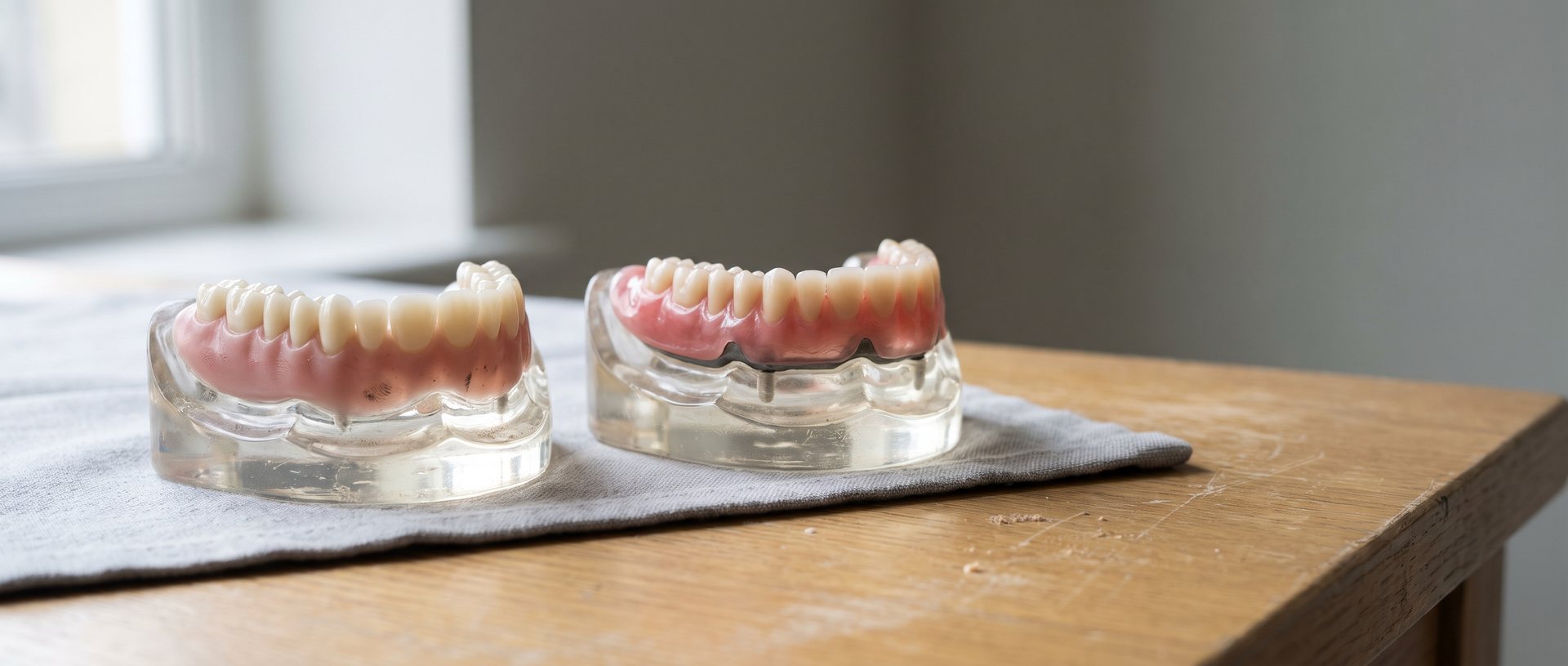
All-On-4 final bridges come in three main builds: acrylic or PMMA teeth on a titanium or metal bar, porcelain layered over a zirconia or metal frame, and monolithic zirconia. The American College of Prosthodontists lists these builds and says each has its own advantages and disadvantages. The table compares them on the points patients ask about most.
Two definitions help. Monolithic zirconia is a bridge milled from one solid block of zirconia ceramic, with no porcelain layer on the chewing surfaces. PMMA, short for polymethyl methacrylate, is the acrylic plastic used for denture teeth and many full-arch bridges. Read each cell as a tendency from the studies named, not a promise: most compared only two builds, few were randomized, and in the 2026 meta-analysis the zirconia sat on a metal frame. Repair rates are also covered in our guide to the downsides of All-On-4.
| Monolithic zirconia | Porcelain layered on zirconia or metal | Acrylic or PMMA on a bar | |
|---|---|---|---|
| Chipping | 7 of 15 bridges chipped over 5 years (2024 study) | 7 of 15 metal-ceramic bridges had chipping or detachment (same study); porcelain chipped on 14.7% of 285 zirconia bridges (2017 review) | Wear and chipping problems reported more often (2026 review) |
| Repairs | Chips polished in the mouth (2024 study) | Every chip went to the lab (2024 study) | Fractures were resolved by repair (2017 review) |
| Opposing natural teeth | More enamel wear than natural teeth cause (2024 meta-analysis of crowns) | Metal-ceramic wore enamel about twice as much as zirconia (same) | Fractured more often against natural teeth (2017 review) |
| Gums and bone | Less bone loss than metal-ceramic, 0.22 vs 1.21 mm at 5 years (2024 study) | More bone loss in that small study | Higher peri-implantitis risk than metal-zirconia (2026 meta-analysis) |
| Look | No significant difference from metal-acrylic (2026 meta-analysis) | Not compared in the studies used here | No significant difference from metal-zirconia (same) |
| Upfront cost | Higher than metal-acrylic (2020 study) | Not compared in the studies used here | Lower than zirconia (2020 study) |
Why are dentists pushing the use of zirconia?
Zirconia gets recommended mainly for fewer wear problems and repairs, not for longer-lasting implants or a better look. The 2026 meta-analysis found metal-zirconia bridges had lower prosthetic wear (risk ratio 0.29) and peri-implantitis risk than metal-acrylic ones, but no significant difference in implant survival, framework fractures, appearance or speech. Most of its studies had moderate to critical risk of bias.
A small retrospective 2024 study in the Journal of Clinical Medicine, 30 upper All-On-4 patients followed for 5 years, found less bone loss around implants under monolithic zirconia than under metal-ceramic bridges. Chipping or detachment showed up in 7 of 15 bridges in each group, but the zirconia chips were polished in the mouth, while every metal-ceramic chip meant a lab repair.
There are reasons for caution too. A 2026 systematic review of all-ceramic implant bridges estimated a 3-year survival of 96.45% for full-arch designs but a success rate, meaning free of complications, of only 75.56%, with chipping at about 6.9% a year, and advised caution for full arches because the evidence is limited.

How long do zirconia and acrylic full-arch bridges last?
Zirconia and acrylic full-arch bridges both often last years, but acrylic ones tend to need repair or replacement sooner. A 2025 study of 67 zirconia arches at a US dental school clinic estimated 72.5% would still be in use at 5 years, which its authors called lower than similar studies but higher than published results for metal-acrylic bridges.
That study's median follow-up was only 8.5 months, so the 5-year figure is a model estimate, and the most common cause of failure was a fracture of the zirconia frame. A 2017 systematic review of 285 zirconia full-arch bridges in 12 observational studies found 1.4% failed from fracture in the short term, and called for long-term studies. For metal-acrylic bridges, a 2026 systematic review in The Journal of Prosthetic Dentistry found wear-related problems, including severe wear, chipping, screw loosening and frame fractures, reported more often. Bridge material did not change implant survival in the 2026 meta-analysis.
| Study | What it found | Follow-up |
|---|---|---|
| 2025 study, 67 zirconia arches, one teaching clinic | Estimated 88.8% in use at 1 year, 72.5% at 5 years | Median 8.5 months |
| 2017 review, 285 zirconia bridges | 1.4% failed from fracture; 14.7% had porcelain chipping | Short term |
| 2026 review, all-ceramic full arches | 96.45% survival, 75.56% complication-free | 3 years (estimated) |
| 2026 meta-analysis, metal-zirconia vs metal-acrylic | No significant difference in implant survival; less wear with zirconia (risk ratio 0.29) | At least 1 year |
Is the temporary bridge acrylic, and are zirconia teeth permanent?
In most studies the temporary bridge is acrylic. A 2017 systematic review of 24 All-On-4 studies found most used acrylic resin for the provisional bridge, sometimes reinforced with metal. That provisional (temporary) set is worn while the implants heal and is then replaced by the final bridge. Zirconia teeth are "permanent" only in the sense of fixed: they still wear, chip and get maintained.
At ANEWU, qualifying cases leave surgery with a temporary fixed bridge, and the on-site lab makes both that bridge and the final one. Once the implants have healed, the final bridge goes onto the implants placed on surgery day, and another surgery is not usually needed. The temporary set is for soft foods and healing, so expect a softer diet through the healing months, widening as your surgeon advises; the full-arch recovery timeline covers the stages, and same-day smiles explains who qualifies.
Can a zirconia bridge break or be repaired?
A zirconia bridge can break, but chipping is the more common problem, mostly in porcelain layers. The 2017 zirconia review of 285 bridges found 1.4% failed from fracture and 14.7% had porcelain chipping. In the 2024 study, chips on monolithic zirconia were polished in place, while chips on metal-ceramic bridges all went to the lab.
Frames do sometimes crack: in the 2025 teaching-clinic study, a fracture of the zirconia frame was the most common reason a bridge failed, 3 of the 9 failures among 67 arches, and the authors named frame thickness, bite force and the opposing teeth as possible factors. Acrylic breaks more often but is usually fixable; in the 2017 All-On-4 review, acrylic fracture was the most frequent prosthetic problem, reported in 9 studies. Screw-retained bridges, which the College prefers, can be unscrewed by your dental team for repairs.
Why would a dentist put zirconia on top and acrylic on the bottom?
The studies used here give no evidence-based rule for mixing materials; it is a judgment about chewing forces, wear and repairs in your bite. What crown studies do show is that ceramics wear the enamel they bite against. In a 2024 network meta-analysis of crowns in the Journal of Dentistry, zirconia caused 40.1 micrometres more enamel wear on opposing teeth than natural teeth did, over up to 24 months.
Metal-ceramic crowns caused even more, 82.5 micrometres, in the same analysis, though it studied single back-tooth crowns rather than full arches. Full-arch data are thinner: the 2026 review in The Journal of Prosthetic Dentistry found opposing-tooth wear measured in only one study, which found no significant difference from natural enamel, and linked grinding and not wearing a night guard to more complications. The 2017 All-On-4 review described acrylic fractures as frequent when the opposing jaw had natural teeth, and high when both jaws had full-arch implant bridges. Who should think twice:
- Zirconia: if the opposing jaw has natural teeth, ask how the zirconia will be polished and how wear will be checked.
- Porcelain-layered bridges: if you clench or grind, since chipped porcelain layers caused the complications in the 2017 zirconia review.
- Acrylic: if you grind or bite against natural teeth, both linked to more complications or acrylic fractures.
- Any material: if you grind but would not wear a night guard.
How much does a zirconia All-On-4 cost compared with acrylic?
A zirconia All-On-4 bridge costs more to make than an acrylic one. In a 2020 study of 74 arches, discussed in our guide to the downsides of All-On-4, zirconia's upfront cost was significantly higher, but fewer complications meant later maintenance costs did not differ much. ANEWU does not publish prices, and the bridge material is one of the things that set yours.
The other cost drivers named on ANEWU's All-On-4 page are the number of implants and any grafting first; its financing page adds whether one or both arches are treated. Expect a dental plan to pay toward part of the work at most, rather than the whole implant treatment. ANEWU takes CareCredit and Proceed Finance. Our guide to how much dental implants cost in Georgia covers the wider picture. Questions to ask your surgeon:
- Which material do you suggest for my upper and lower bridge, and why?
- Is the zirconia monolithic or layered with porcelain?
- How is a chip or broken tooth repaired, and how long does it take?
- What will the bridge likely need at 5 and 10 years?
- Will I need a night guard?
- How does the cost change between materials in my case?
How is the bridge material chosen at ANEWU?
At ANEWU, the bridge material is settled with your surgeon as part of your treatment plan. After a free consultation and a 3D scan taken in the office, Dr. Abtin Shahriari sets the implant count and tells you which options your jaw can support. Cost and payment are reviewed in the same visit, and both the temporary and final bridges are made in the on-site lab.
If the scan shows enough bone and the implants are stable when placed, you can leave surgery with a provisional fixed bridge. If they are not, the fixed teeth come after healing instead. Either way, the final bridge is made after healing and goes onto the implants placed on surgery day. If you grind your teeth, or still have natural teeth in the opposing jaw, say so at the consultation so the material choice accounts for it. You can book a consultation at the Buckhead, Cumming or Dawsonville office.
- Free consultation and 3D scan in the office.
- Dr. Abtin Shahriari reviews the scan and sets the implant count.
- Your plan and its cost, including the bridge material, are reviewed; financing can be arranged before treatment.
- Surgery, with a provisional bridge the same day for qualifying cases.
- After healing, the final bridge is made in the on-site lab and fitted.
When should you call right away about your bridge?
Call your implant office the same day if a tooth or piece breaks off your bridge, the bridge feels loose or rocks, or a sharp edge is cutting your tongue or cheek. A loose or rocking bridge can mean a loose screw, one of the wear-related problems the 2026 Journal of Prosthetic Dentistry review found more often with metal-acrylic bridges. Go to an emergency room for trouble breathing or swallowing, spreading swelling, or a high fever.
Gum changes around an implant matter too. The American College of Prosthodontists lists redness, swelling, bleeding and pus as signs of inflammation to check at maintenance visits; do not wait for the next visit if you notice them. Call the office for:
- A chipped, cracked or missing tooth on the bridge.
- A bridge that moves, clicks or sits differently when you bite.
- Pus, bleeding or a bad taste around an implant.
- Pain or swelling that gets worse instead of better.
Sources and further reading
- Prosthetic and Biological Complications of Metal-Zirconia versus Metal-Acrylic Implant-Supported Screw-Retained Complete-Arch Prostheses: A Systematic Review and Meta-Analysis Journal of Clinical and Experimental Dentistry, 2026
- Long-term Clinical Outcomes and Cost-Effectiveness of Full-Arch Implant-Supported Zirconia-Based and Metal-Acrylic Fixed Dental Prostheses: A Retrospective Analysis International Journal of Oral and Maxillofacial Implants, 2020
- A Retrospective Evaluation of 5 Years of Clinical Results of Metal-Ceramic vs. Monolithic Zirconia Superstructures in Maxillary All-on-4 Concept Journal of Clinical Medicine, 2024
- Survival analysis of zirconia implant-supported, fixed complete dentures: A 5-year retrospective cohort study Journal of Prosthetic Dentistry, 2025 (online 2023)
- Clinical outcomes of full arch fixed implant-supported zirconia prostheses: A systematic review European Journal of Oral Implantology, 2017
- Systematic Review Evaluating the Influence of Veneering Design on the Clinical Outcome of All-Ceramic Implant-Supported 3-4 Units and Full Arch Fixed Dental Prostheses Journal of Esthetic and Restorative Dentistry, 2026
- Prosthesis wear and complications in various materials used for fixed implant-supported prostheses: A systematic review Journal of Prosthetic Dentistry, 2026
- Antagonist enamel tooth wear produced by different dental ceramic systems: A systematic review and network meta-analysis of controlled clinical trials Journal of Dentistry, 2024
- The all-on-four treatment concept: Systematic review Journal of Clinical and Experimental Dentistry, 2017
- Clinical outcomes of zirconia implants: a systematic review and meta-analysis Clinical Oral Investigations, 2023
- Maintenance of Full-Arch Implant Restorations (position statement) American College of Prosthodontists, 2023
- Whitening (Oral Health Topics) American Dental Association, updated November 2026
This article is general information about dental and facial procedures, not a diagnosis or medical advice. Every jaw and every health history is different, so the right plan for you can only be set after an exam and imaging with a surgeon.