









Short answer
The dental implant process runs from a consultation and 3D scan to implant surgery, a healing period while bone fuses to the implant, and then the abutment and crown. Cleveland Clinic puts that fusion at three to nine months, so a single implant in a healed site usually takes several months from start to finish, and a bone graft first adds more.
What are the four stages of dental implants?
The four stages of dental implants are planning, placement, healing and restoration. Planning is the exam and 3D scan. Placement is the surgery that sets a titanium post in the jaw. Healing is the months in which bone fuses to that post. Restoration is fitting the abutment and the crown. Removing a tooth or grafting bone adds a stage before placement.
Osseointegration is the process in which jawbone grows onto the surface of an implant and locks it in place. The healing guide from the American Association of Oral and Maxillofacial Surgeons (AAOMS) describes new bone cells attaching to the implant over several months, and the association's main implant page says there is no shortcut around that process. The surgery is brief by comparison: a patient leaflet from Cambridge University Hospitals, an NHS trust, says placing a single implant usually takes around half an hour.
- Step 1: Consultation, health history and a 3D scan of the jaw.
- Step 2: A plan that sets implant position, size and any graft.
- Step 3, if needed: Tooth removal, often with a socket graft.
- Step 4, if needed: Graft healing, checked on a new scan.
- Step 5: Implant placement under numbing, closed with stitches.
- Step 6: Healing and integration, with check-up visits.
- Step 7: Abutment, impression and the final crown.
How long does the dental implant process take?
The dental implant process takes several months for most people, and the healing stage sets the pace. Cleveland Clinic puts bone fusion around an implant at three to nine months. Guy's and St Thomas' NHS Foundation Trust tells its patients to wait at least 3 months before an implant carries teeth, and says a bone graft can make treatment 4 to 6 months longer.
The table sets the stages side by side for three common cases: a single implant where the tooth was lost long ago and the site has healed, an implant placed into the socket on the day the tooth comes out, and a tooth removed with a socket graft, or a thin ridge rebuilt, before the implant. Each range names its source, and real cases can fall outside them.
Two cautions about reading it. The ranges overlap, and placing the implant at extraction does not shorten the bone healing that follows; it removes the separate wait for the socket. And a range is not a booking date. Each stage starts when a check shows the last one has healed, so the figure that matters for you is the one your surgeon gives after reading your own scan.
| Stage | Healed site | Implant at extraction | Bone graft first |
|---|---|---|---|
| Consultation and 3D scan | One visit; the scan takes minutes | One visit | One visit |
| Tooth removal | Not needed | Same visit as the implant | Tooth removed, socket grafted |
| Graft healing | None | No separate wait for the socket | At least 3 months, 9 to 12 if large (Cleveland Clinic) |
| Implant placement | About half an hour (Cambridge University Hospitals) | Same visit as removal | Once a new scan shows the graft is ready |
| Healing and integration | 3 to 9 months (Cleveland Clinic); at least 3 (Guy's and St Thomas') | Same range | Same range |
| Abutment and crown | About an hour, sometimes a small second procedure (Cleveland Clinic) | Same | Same |
| What sets the total | The 3 to 9 month healing window | The same window, from extraction day | Graft healing plus that window |
Can a dental implant heal in 3 months?
A dental implant can be ready for its crown at about three months, and some carry a tooth sooner, but many need longer. A 2013 Cochrane review notes that implants are conventionally kept free of chewing load for 3 to 8 months, and it found no convincing evidence that loading them earlier changed failure rates in the trials it pooled.
Researchers sort loading by timing. The International Team for Implantology's 2018 consensus, as set out in a 2025 review in the Journal of Clinical Medicine, calls loading within 1 week immediate, 1 week to 2 months early, and after 2 months conventional. The Cochrane review pooled 26 randomized trials with 1,217 participants and found a mean implant failure rate of 2.5 percent, but only three trials were judged at low risk of bias, and follow-up ran from 4 months to 1 year.
Earlier loading depends on the implant being very firm on the day it goes in. A 2026 narrative review in the Journal of Advanced Periodontology and Implant Dentistry notes that excess micromotion raises the risk of early failure and that higher initial stability makes immediate loading more predictable. That is why a surgeon who finds soft bone, or an implant that seats less firmly than planned, leaves it longer before a tooth goes on.
Do you have no teeth while waiting for implants?
A visible gap is usually covered while a single implant heals. Cleveland Clinic says a temporary tooth is made for implants near the front of the mouth, while a back tooth may not need one. Any tooth fitted on the day of surgery is provisional; the final crown comes after healing, and the choice of cover is part of your plan.
What you wear depends on the stage you are in, which is why it belongs in the plan. For a tooth that shows, cover may be needed from the day it comes out until the crown is fitted, the healing window in the table plus any graft time. The 2026 review of temporary prostheses stresses that a removable tooth worn over a fresh graft or incision must be trimmed so it does not press on the site, and that a provisional crown on the implant needs an implant firm enough to carry it.
The choice depends on the tooth, your bite and the surgery, and it is made with the plan rather than on surgery day. For a molar that does not show when you smile, some people leave the space open while it heals.
- Removable partial denture, often called a flipper: a small plate carrying a tooth.
- Clear retainer with a tooth (Essix type): thin and short-term only.
- Bonded temporary bridge: a tooth attached to the neighbouring teeth.
- Provisional crown on the implant: only when the implant is firm enough.
How can I make my dental implant heal faster?
You cannot make bone fuse to a dental implant faster, but you can avoid slowing it. Not smoking matters most: a 2024 meta-analysis in the Journal of Dentistry, covering 59,246 implants, found smoking linked to higher odds of early implant failure (odds ratio 2.59). Following your written aftercare and keeping each check-up does the rest.
Most of what stretches a timeline is settled before surgery. Bone volume often decides it, because a thin ridge needs grafting and its own healing time. A 2025 review of placement timing in the Journal of Clinical Medicine names good general health, enough bone, no infection and a firm implant on the day as the conditions that matter most. Cleveland Clinic adds active gum disease and unmanaged diabetes as reasons an implant may need to wait.
The 2024 meta-analysis found the smoking link was stronger in the upper jaw than the lower, though only three studies split their results by jaw. If you smoke, ask your surgeon when to stop and for how long, and get the answer in writing.
- Bone volume: a graft adds months.
- A tooth still in place: removal adds a visit, sometimes with a socket graft.
- Infection at the site: usually settled before an implant goes in.
- Implant stability on the day: decides how soon a tooth can attach.
- Smoking and some health conditions: raise the risk of early failure.
- Front or back of the mouth: front teeth add a temporary and gum planning.
What is the difference between the implant, the abutment and the crown?
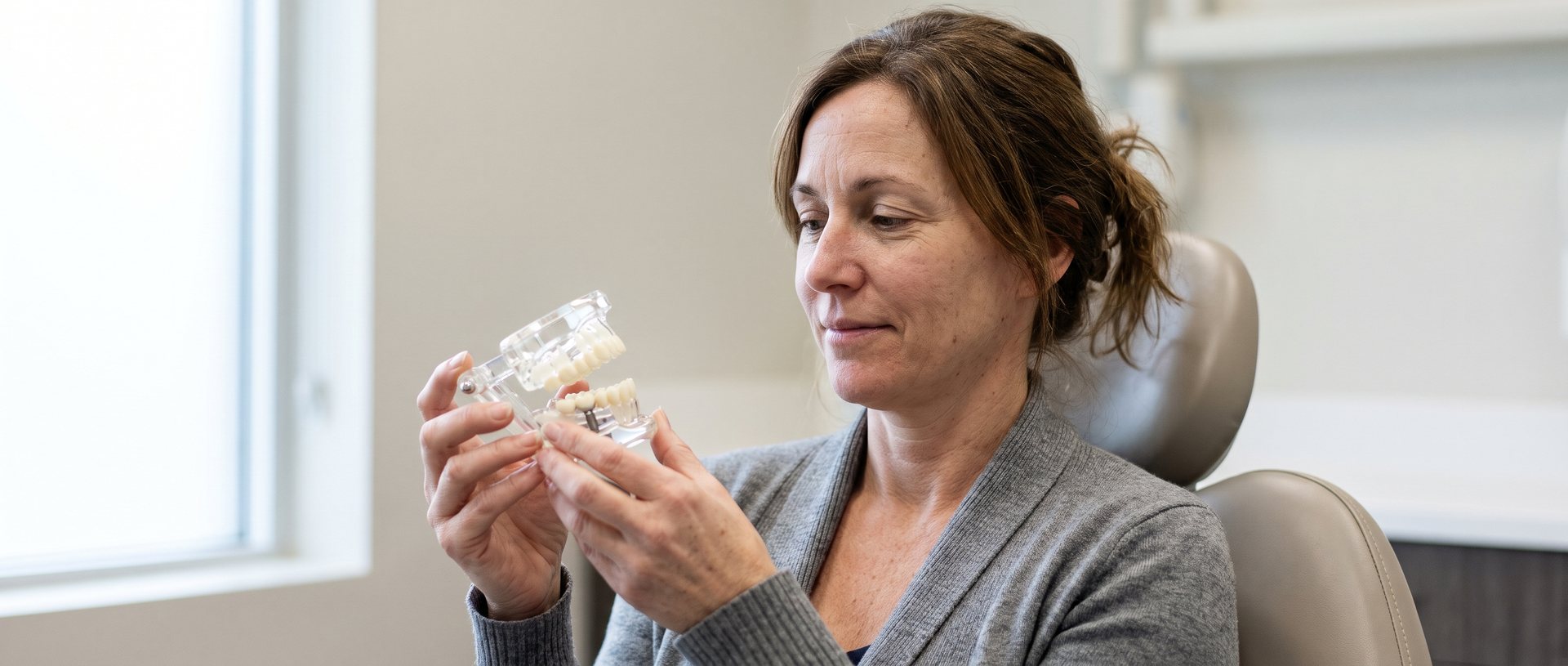
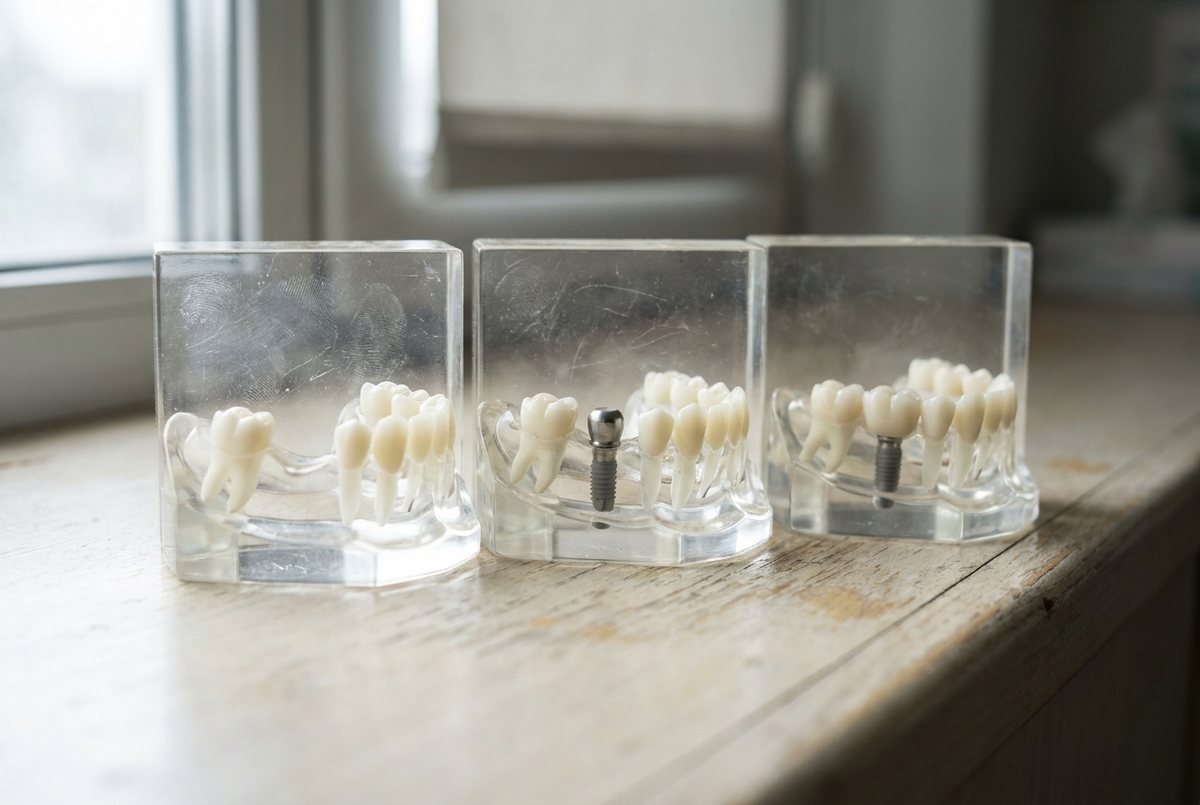
A dental implant is the titanium post set into the jawbone in place of the tooth root. The abutment is the short connector attached to the implant that rises through the gum. The crown is the visible tooth fixed to the abutment, the part you bite and chew with.
That is why some people have one more short visit near the end. Guy's and St Thomas' notes that an implant buried under the gum needs a small second procedure before it can be used, and Cleveland Clinic puts fitting the abutment and final crown at about an hour.
Where can I book a single-tooth implant consultation with 3D imaging?
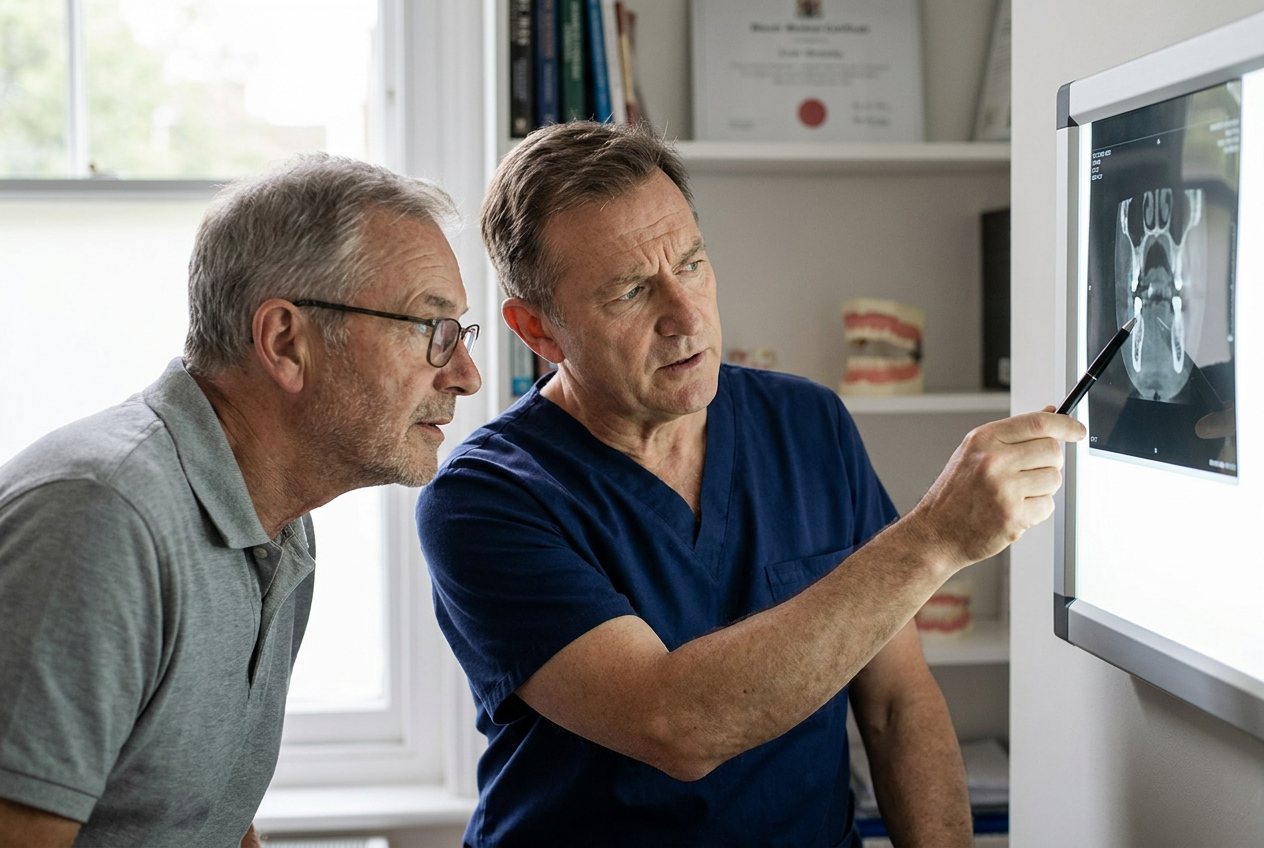
ANEWU offers a free first consultation that includes a 3D scan at its Buckhead, Cumming and Dawsonville offices in Georgia. The scan is taken in the office during that visit, Dr. Abtin Shahriari reviews it and examines you, and no treatment is done that day, so you leave with a plan and a timeline for your own case.
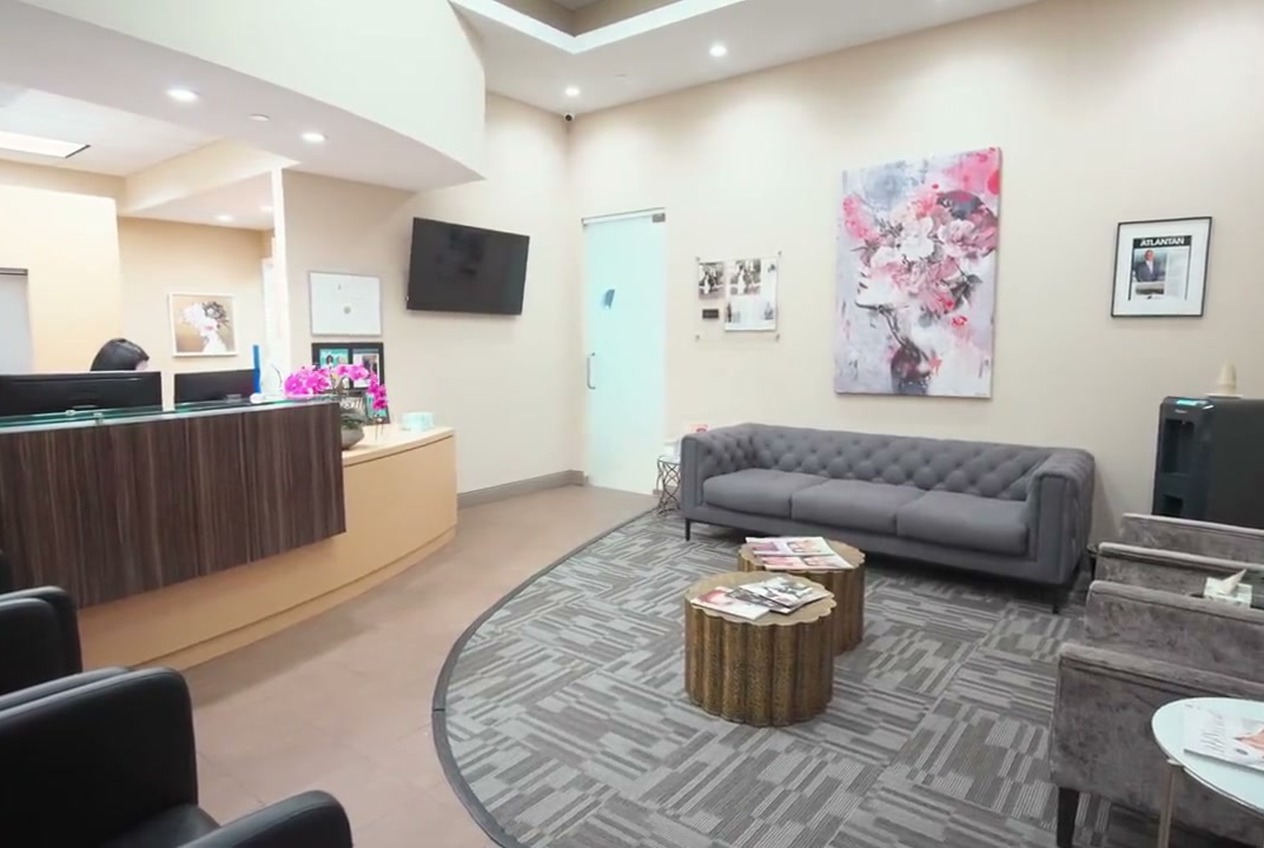
ANEWU's implant page describes five stages that apply to a single tooth as well as to a full arch: consultation and 3D imaging, your treatment plan, grafting first if your case needs it, implant placement and temporary teeth for qualifying full-arch cases, and healing and your final restoration. At the first visit the front desk takes your medical and dental history, the scan is taken, and the surgeon goes through what it shows with you on screen.
What happens next depends on the scan. If the bone at the gap is wide and tall enough, the plan moves to placement. If it is too thin, grafting comes first, and a second 3D scan confirms the graft has hardened before the implant is booked. If the tooth is still in place, socket preservation can add graft material at removal to limit the shrinkage that follows. Cost is reviewed at the same visit and depends on the number of implants, any grafting and the restoration. You can book a consultation online. Questions to ask your surgeon:
- Does my scan show enough bone, or do I need a graft first?
- Can the implant go in when the tooth comes out, or should the socket heal?
- What will I wear over the gap, and for how long?
- How many months do you expect before my final crown?
- How many visits will that take, and at which office?
- What would make you extend the healing time?
When should you call your surgeon right away?
Call your surgeon's office right away after implant surgery for bleeding that will not stop, severe or rising swelling, a fever, pus at the site or a reaction to a medication. Go to an emergency room for trouble breathing or swallowing, swelling that is spreading, or a high fever.
Some soreness, swelling and light oozing in the first day or two are expected. The direction matters: discomfort that eases each day is normal, while pain, swelling or bleeding that increases after the first day or two is the signal to call. Cleveland Clinic's bone graft guidance lists a fever of 101 degrees Fahrenheit (38.3 Celsius) or higher, increased swelling, pus and severe pain as reasons to contact your provider.
ANEWU's post-op instructions ask patients to call immediately for uncontrolled bleeding, severe swelling, difficulty breathing or swallowing, or a medication reaction, and to call during office hours if pain, swelling or bleeding builds after the first day or two. The offices are open Monday to Saturday, 7am to 5pm, on (470) 567-6415.
- Call the office now: uncontrolled bleeding, severe swelling, a medication reaction.
- Call the office now: fever of 101 F or higher, or pus at the site.
- Call during office hours: pain, swelling or bleeding that grows after day two.
- Emergency room or 911: trouble breathing or swallowing, spreading swelling, high fever.
Sources and further reading
- Dental Implants Cleveland Clinic, accessed 2026
- Dental Bone Graft Cleveland Clinic, accessed 2026
- Having a dental implant Guy's and St Thomas' NHS Foundation Trust, accessed 2026
- Insertion of dental implants Cambridge University Hospitals NHS Foundation Trust, accessed 2026
- Dental Implant Surgery American Association of Oral and Maxillofacial Surgeons
- Healing process for dental implants American Association of Oral and Maxillofacial Surgeons, 2026
- Interventions for replacing missing teeth: different times for loading dental implants Cochrane Database of Systematic Reviews, 2013
- Optimizing Implant Placement Timing and Loading Protocols for Successful Functional and Esthetic Outcomes: A Narrative Literature Review Journal of Clinical Medicine, 2025
- Temporary prostheses following implant surgery: A narrative review Journal of Advanced Periodontology and Implant Dentistry, 2026
- Smoking in relation to early dental implant failure: A systematic review and meta-analysis Journal of Dentistry, 2024
- Patients' Perception of Recovery after Dental Implant Placement Medicina, 2021
This article is general information about dental and facial procedures, not a diagnosis or medical advice. Every jaw and every health history is different, so the right plan for you can only be set after an exam and imaging with a surgeon.