










Short answer
You are a likely candidate for All-On-4 if you have lost, or are about to lose, all the teeth in one arch and your jaw can hold four implants. Few things rule it out outright. Gum disease, smoking and uncontrolled diabetes are usually managed first, jaw radiation and certain bone-affecting medicines can change the plan, and age alone is not a cutoff. An exam and 3D scan decide.
Who is a candidate for All-On-4 dental implants?
You are a likely candidate if you have lost, or are about to lose, all of the teeth in one arch, your jaw has room for four implants, and your health allows outpatient oral surgery. A 2017 consensus report names a jaw with atrophic (shrunken) bone, with or without remaining teeth that cannot be saved, in patients rated ASA I or II as the main indication. Your exam and 3D scan confirm it.
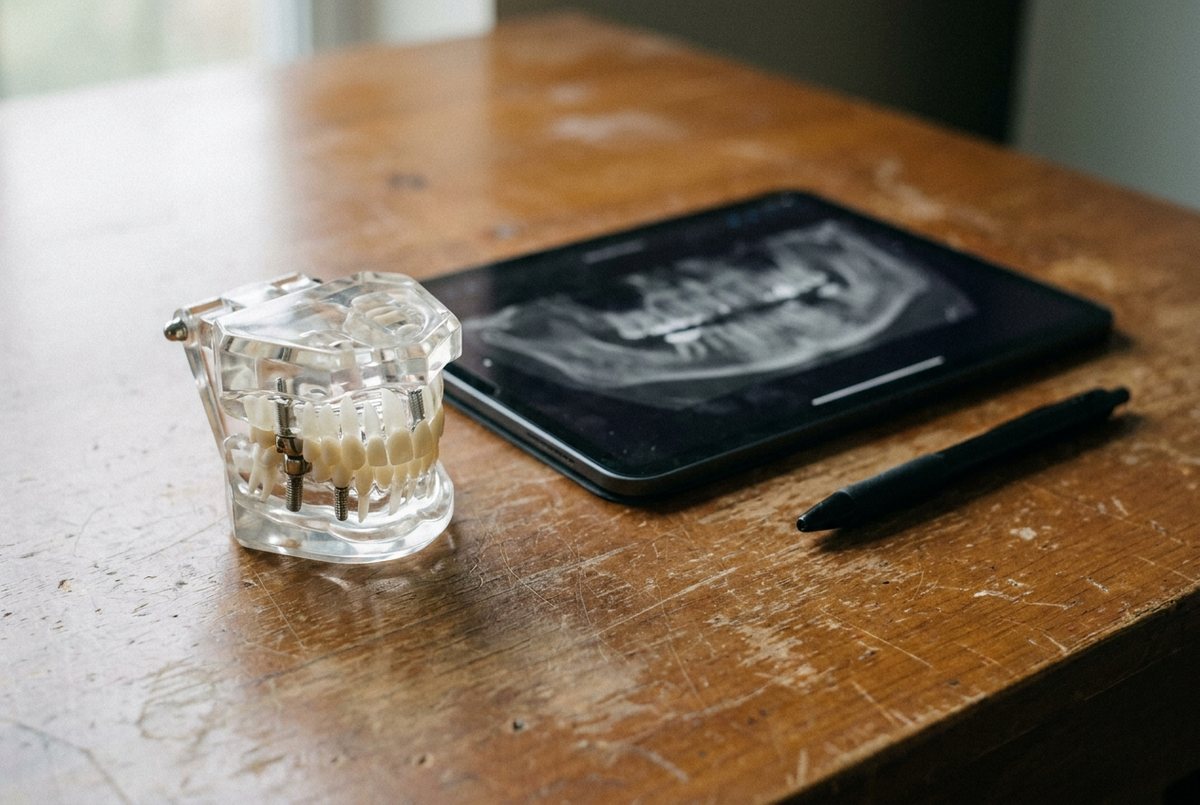
All-On-4 replaces a full upper or lower arch with one fixed bridge on four implants. The back two implants are angled to use the bone that is already there, and the bridge stays in place rather than coming out for cleaning. For qualifying cases, a provisional (temporary) fixed bridge can be attached the day of surgery. It is not the final set: the final bridge is made in ANEWU's on site lab and fitted after a healing period.
The consensus also sets practical limits. The jaw needs enough bone between the sinuses (upper jaw) or the chin nerve exits (lower jaw) to place four implants, and 12 mm of height in the space for the bridge. For provisional teeth on the day of surgery, each implant must seat with an insertion torque of over 35 Ncm, a measure of how firmly it is held. ASA I or II is the anesthesiologists' scale for a healthy person (I) or someone with mild disease that does not substantially limit function (II). A 2017 systematic review of 24 studies found most authors included such patients. Both papers call their evidence limited, and the consensus came from a conference named for an implant manufacturer, though its authors declared no conflict of interest.
What disqualifies you from All-On-4 dental implants?
Very little disqualifies you outright. Most factors sort into three groups: those usually managed first, such as gum disease, smoking, uncontrolled diabetes and low bone volume; those that can change the plan, such as bone loss, jaw radiation and certain bone-affecting medicines; and rare true contraindications.
The FDA says your overall health is an important factor in whether you are a good candidate, how long you heal and how long the implant may stay in place. Most research here covers dental implants in general, not All-On-4 alone, so read the numbers as signals, not as a score for you.
| Group | Examples | What usually happens |
|---|---|---|
| Managed first | Gum disease, smoking, uncontrolled diabetes, low bone volume | Treat, control or rebuild first, then reassess |
| Can change the plan | Bone loss, radiation to the jaw, certain bone-affecting medicines | A different implant type or timing, with your other doctors involved |
| Rare true contraindication | Certain bone-affecting cancer medicines during treatment; a health problem that makes elective surgery unsafe right now | Implants are avoided or another option is used |
Which problems usually just need to be managed first?
Gum disease, smoking and uncontrolled diabetes are usually managed before surgery, not treated as a final no. The FDA lists untreated gum disease as a risk with implants, and says implant failure from infection may be more likely in uncontrolled diabetes and delayed healing more likely in smokers. Your surgeon may ask you to treat or control them first.
A 2025 meta-analysis of 14 prospective cohort studies (each with at least 3 years of follow-up) found that people with a history of periodontitis, a form of gum disease, had a hazard ratio of 1.75 for implant loss and a risk ratio of 3.24 for peri-implantitis, the inflammation and bone loss that can develop around an implant. All of those patients had gum treatment first and regular follow-up care, and the authors stress both. Gum disease is also why many people lose a full arch: a 2023 clinical paper says the All-On-4 concept was devised for severe full-arch gum disease that made keeping teeth difficult. A history raises risk but is not a bar by itself.
A 2021 systematic review and meta-analysis of 292 publications found the odds of implant failure in smokers were about 2.4 times those in non-smokers (odds ratio 2.402). In 561 All-On-4 patients followed for 3 to 17 years at one Tokyo clinic (authors include a developer of the concept, and two reported educational fees from an implant company), implant-level survival was 97.9% in smokers (10 or more cigarettes a day) and 99.2% in non-smokers, a gap that was significant in a simple comparison but not after adjusting for other factors. A 2024 systematic review found only one study of acceptable quality and could not determine the effect of quitting before oral surgery, so ask your surgeon what to do. For diabetes, a 2022 systematic review of 40 clinical studies found more peri-implantitis and higher long-term implant loss when diabetes is poorly controlled, and similar success rates under controlled conditions.
What if you do not have enough bone for All-On-4?
Low bone volume usually changes the route rather than ending the plan. The angled back implants of All-On-4 work with the bone you have, but the jaw still needs room for four implants. When it does not, bone grafting can rebuild the jaw first, or zygomatic implants can anchor in the cheekbone. A 3D scan shows which route applies.
The 2017 systematic review says the concept was developed to use the bone that remains in shrunken jaws and avoid regenerative procedures. It also found little guidance on minimum bone: only two of its 24 studies named minimum sizes for the bone between the chin nerve exits, one asking for at least 6 mm of height and the other for more than 5 mm of width and more than 8 mm of height. Treat those as examples, not your cutoffs; your scan gives the real numbers.
ANEWU notes that the upper back jaw loses height quickly once the molars are gone, so where bone is missing matters as well as how much. Bone grafting adds height or width back over a healing period before implants go in, and the timeline depends on the size and location of the graft. Zygomatic implants anchor in the cheekbone above the sinus, so a graft can often be skipped. It adds that not every jaw has the bone volume for four implants; it is a measurement, not a judgement call. Our guide to dental implants with bone loss covers these routes.
Can jaw radiation or certain medicines change your All-On-4 plan?
Yes. Past radiation to the jaw and certain bone-affecting medicines can change what your surgeon recommends and when, without necessarily ruling you out. A 2022 meta-analysis found implants failed more often in irradiated bone than in non-irradiated bone (odds ratio 1.97), and the American Association of Oral and Maxillofacial Surgeons (AAOMS) has separate guidance for people taking bone-affecting medicines.
The 2022 meta-analysis covered people treated for head and neck cancer. Mean implant survival was 87.8%, with individual studies ranging from 34% to 100%. Implants placed in irradiated grafted bone were more likely to fail than those in irradiated native bone (odds ratio 2.26), and the authors advise placing implants in local bone rather than in grafts where possible, with close aftercare.
The AAOMS 2022 position paper covers osteonecrosis of the jaw, a bone complication linked to certain bone-affecting medicines. For people taking such medicines for osteoporosis, it cites an estimated risk of about 0.02 to 0.04 percent for one type of medicine and 0.3 percent for another, and says elective dentoalveolar (tooth and jaw) surgery does not appear to be contraindicated in this group. For cancer treatment it reports higher estimates, mostly under 5 percent. If implants are placed, it advises informed consent that covers the low risk and early and late implant failure. It also says robust data do not exist and available data conflict. Any decision about a medicine belongs to your prescribing doctor and surgeon together.
What are the true contraindications to All-On-4?
True contraindications are rare. The clearest one in the research is in the AAOMS 2022 position paper: dental implants are contraindicated for people receiving certain bone-affecting medicines for cancer. Beyond that, your overall health helps decide whether surgery is wise, and a diagnosis matters less than whether the condition is controlled.
That paper says placement of dental implants should be avoided in cancer patients receiving certain bone-affecting medicines by injection or infusion, or antiangiogenic medicines, and its prevention table lists implants as contraindicated during that treatment. The decision belongs to your oncology team, your physician and your surgeon together.
A 2022 systematic review of diabetes and dental implants concluded that under controlled conditions there is no contraindication for implant surgery in people with diabetes. Tell your surgeon about every condition and medicine you take, so the plan fits you.
Does age rule you out of All-On-4?
No. Age alone is not a cutoff. A 2017 meta-analysis of implants in people aged 65 and older found 96.2% implant survival at 5 years and concluded that age alone should not be a limiting factor for dental implant therapy. Your health, medicines and bone are what your surgeon assesses instead.
That meta-analysis pooled 11 prospective studies. Implant survival was 97.7% at 1 year, 96.3% at 3 years, 96.2% at 5 years and 91.2% at 10 years, though the 10-year figure is lower and rests on only 3 studies. The studies covered implants in general, not All-On-4 alone, and included only regular-diameter, micro-rough implants, so read the figures as reassurance about age, not a prediction for your jaw.
Who is All-On-4 not for?
All-On-4 is not for you if you still have healthy teeth you want to keep in that arch, want a removable result, cannot commit to daily cleaning and regular checkups, or are in treatment with certain bone-affecting cancer medicines. It also fits poorly when the jaw cannot hold four implants and you decline the steps that would address that.
All-On-4 replaces every tooth in the arch, and any remaining teeth in that arch are removed before the implants go in. If your teeth can be saved, other treatments may keep them. If you want to take your teeth out at night, an overdenture that snaps onto implants is the removable option ANEWU describes. All-On-6 spreads a fixed bridge over six implants for more support.
A fixed bridge also needs upkeep. The American College of Prosthodontists says patients must take responsibility for personal hygiene, advises brushing at least twice daily plus floss, interdental cleaners and a water irrigator, and recommends in-office maintenance visits every 2 to 6 months based on your risk profile, such as smoking or a gum disease history. If that routine is not realistic for you, say so before surgery. Our guide to the downsides of All-On-4 covers upkeep and repairs.
What does the candidacy check look like at ANEWU?
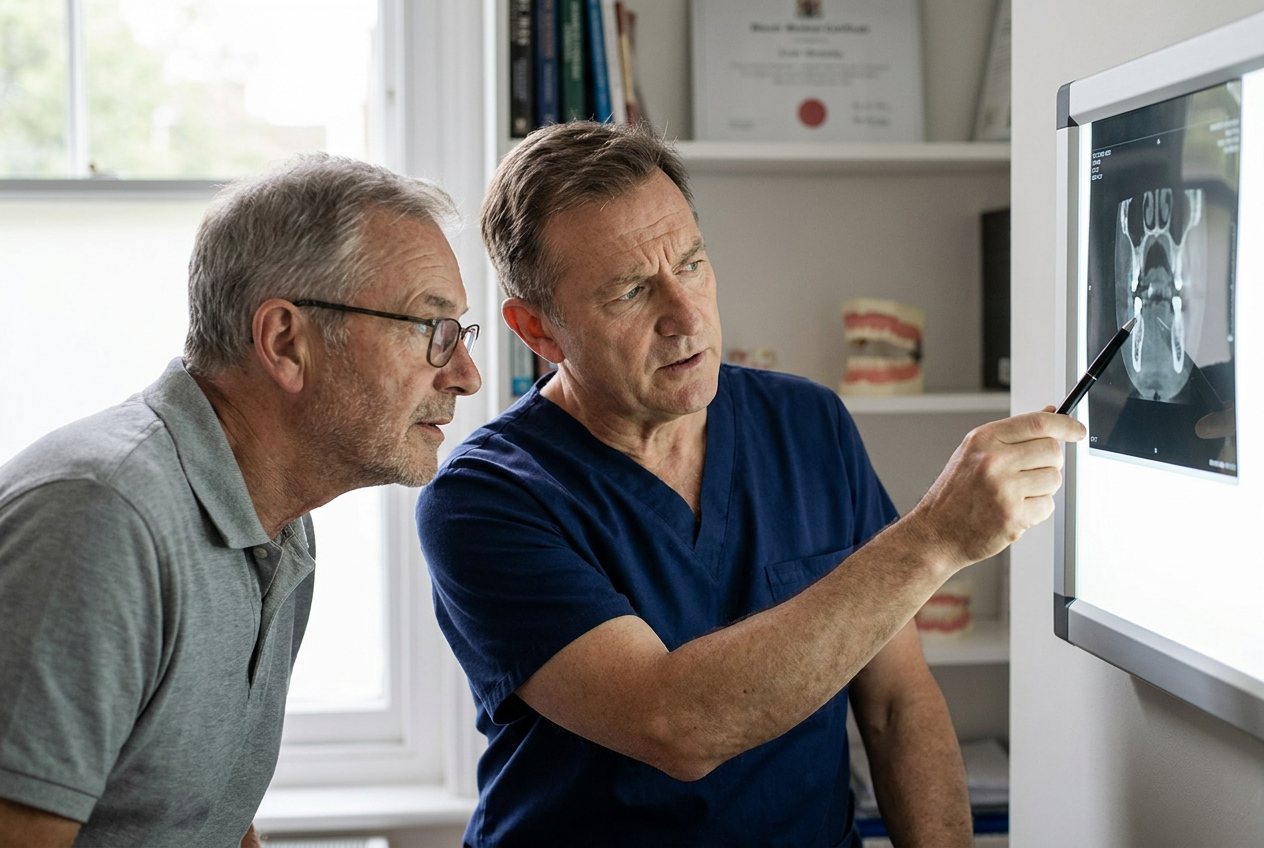
At ANEWU, your first visit is a free consultation in three parts: the front desk reviews your medical and dental history and medications, an in-office 3D scan maps your jaw, and an oral surgeon examines you and explains your options in plain language. No treatment is performed that day, and the cost of the recommended plan is reviewed with you before you leave.
Dr. Abtin Shahriari, an oral surgeon specializing in implant dentistry, performs the implant exam and the All-On-4 surgery himself, so the surgeon who reads your scan is the one operating on the day. Bring a list of your medications, your insurance card and any earlier x-rays or referral, because older x-rays show how long a tooth has been missing, which helps judge bone loss. If something would need to happen first, such as grafting, you are told plainly. To find out where you stand, book a free consultation at the Buckhead, Cumming or Dawsonville office.
- Based on my scan, do I have enough bone for four implants, or would I need grafting first?
- Which of my health conditions or medicines matter for surgery, and who will coordinate with my other doctors?
- If I smoke, or have gum disease or diabetes, what must be controlled first, and how will you know?
- Am I likely to qualify for a provisional bridge on the day of surgery, and what decides it?
- How often will I need checkups, and what cleaning routine should I follow at home?
- If All-On-4 is not the right fit, which options remain, such as All-On-6 or an overdenture?
Sources and further reading
- American Association of Oral and Maxillofacial Surgeons' Position Paper on Medication-Related Osteonecrosis of the Jaws-2022 Update American Association of Oral and Maxillofacial Surgeons, Journal of Oral and Maxillofacial Surgery, 2022
- Dental Implants: What You Should Know U.S. Food and Drug Administration, content current as of 10/29/2021
- Maintenance of Full-Arch Implant Restorations American College of Prosthodontists, revised 2023
- Consensus statements and clinical recommendations on treatment indications, surgical procedures, prosthetic protocols and complications following All-On-4 standard treatment Journal of Clinical and Experimental Dentistry, 2017; consensus from a conference named for an implant manufacturer
- The all-on-four treatment concept: Systematic review Journal of Clinical and Experimental Dentistry, 2017
- The All-on-four concept for fixed full-arch rehabilitation of the edentulous maxilla and mandible: a longitudinal study in Japanese patients with 3-17-year follow-up and analysis of risk factors for survival rate International Journal of Implant Dentistry, 2023
- Smoking and Dental Implants: A Systematic Review and Meta-Analysis Medicina, 2021
- Does smoking cessation affect postoperative healing following oral surgery among smokers? A systematic review BMC Oral Health, 2024
- Systematic review on diabetes mellitus and dental implants: an update International Journal of Implant Dentistry, 2022
- Effectiveness of Implant Therapy in Patients With and Without a History of Periodontitis: A Systematic Review With Meta-Analysis of Prospective Cohort Studies Journal of Periodontal Research, 2025
- Dental implants in patients with head and neck cancer: a systematic review and meta-analysis of the influence of radiotherapy on implant survival Clinical Oral Implants Research, 2022
- Dental implants in the elderly population: a systematic review and meta-analysis Clinical Oral Implants Research, 2017
This article is general information about dental and facial procedures, not a diagnosis or medical advice. Every jaw and every health history is different, so the right plan for you can only be set after an exam and imaging with a surgeon.