










Short answer
A 2019 systematic review of 18 prospective studies found 96.4% of dental implants still in place after 10 years, and a 2025 registry of 158,824 implants (2014 to 2022 records) recorded a 2.21% failure rate. Failure is either early, when bone does not fuse to the implant, or late, usually from infection and bone loss around it. Smoking, past gum disease and teeth grinding raise the risk.
What is the failure rate of dental implants?
Studies put dental implant failure at roughly 2% to 7% of implants over follow-up of up to ten years, so about 93 to 98 of every 100 stay in place. The exact figure depends on how long people were followed, how failure was defined, and how many patients dropped out of follow-up.
A 2019 systematic review in the Journal of Dentistry pooled 18 prospective studies of modern, roughened-surface implants and found 96.4% survival at 10 years. When the authors accounted for patients lost to follow-up, the estimate dropped to 93.2%. A 2025 registry study of 158,824 implants in 53,874 patients, from one of Israel's national health plans between 2014 and 2022, found an overall failure rate of 2.21%.
Survival means the implant is still in the mouth when the study ends. It does not describe the health of the gum and bone around it, which is why the infection figures later in this post matter as much as the survival numbers.
| Study | Size | Result |
|---|---|---|
| 10-year systematic review (2019) | 18 prospective studies | 96.4% survival; 93.2% after adjusting for lost follow-up |
| National health plan registry (2025) | 158,824 implants in 53,874 patients | 2.21% failed overall; 1.56% failed before teeth were attached |
| 20-year meta-analysis (2024) | 8 studies (3 prospective, 5 retrospective) | 92% in the prospective studies (78% after estimating missing follow-up); 88% in the retrospective studies |
What happens to a dental implant after 20 years?
Long-term data exist, but few studies follow implants for 20 years. A 2024 meta-analysis of eight of them found 20-year survival of 92% in three prospective studies (78% after missing follow-up data were estimated) and 88% in five retrospective studies. That is roughly four in five implants or better.
The authors said follow-up is essential and should not end after placement or even after 10 years. They also warned that statistical errors can overestimate how well treatment works, and they asked for more high-quality studies, particularly on implant success rather than survival alone.
Over two decades, the tissue around the implant is the main long-term concern. A 2025 AO/AAP meta-analysis (AO and AAP are the Academy of Osseointegration and the American Academy of Periodontology) estimated that peri-implantitis develops in about 22% of patients within 20 years of function. The crown, bridge or denture on top takes the daily wear and may need repair or replacement over the years.
What is the main reason dental implants fail?
It depends on timing. Early failures happen when bone does not fuse to the implant. Late failures are usually caused by inflammation and infection around the implant. In a 2026 German series of 738 removed implants, peri-implant inflammation accounted for 71% of removals and 83% of late losses.
Early failure means the implant does not anchor in the bone while it heals. In the 2025 registry, 1.56% of implants failed during this osseointegration phase, before teeth were attached, out of 2.21% failing overall. The authors reported that failures were most frequent in the first year and declined in later years.
Late failure usually traces to peri-implantitis, inflammation and infection that gradually destroy the bone around an implant. The German series came from a university surgery department that received patients sent for implant removal, so it shows why implants get removed, not how often it happens. Even so, average bone loss on x-rays at removal was 51%, which fits the picture of advanced disease by the time an implant has to come out.
How common is peri-implantitis?
A 2025 AO/AAP meta-analysis of 102 studies and 13,030 patients found peri-implantitis in 21% of patients with dental implants and the milder peri-implant mucositis in 46%. Neither condition means an implant is lost, but both need attention. Treat these as averages across many patients, not a personal forecast.
The review authors describe peri-implant mucositis as inflammation around the implant and peri-implantitis as a more serious infection around it. The 2017 World Workshop consensus report, published in 2018, defines peri-implantitis as a plaque-associated condition with inflammation of the gum around the implant and progressive loss of the supporting bone. Bleeding on gentle probing is the main sign of mucositis, and strong evidence points to plaque as its cause. That is why cleaning around an implant every day matters.
The review identified periodontitis, diabetes mellitus, smoking habits and alcohol consumption as risk indicators for peri-implantitis. It concluded that more than half of patients with implants were affected by some peri-implant disease over a 10-year follow-up. Only risk indicators, not proven causes, could be identified in the evidence.
What disqualifies you from getting dental implants?
Few conditions rule out dental implants outright. A 2019 review in Dental Clinics of North America reported few absolute contraindications and tied higher failure risk to past gum disease, teeth grinding, smoking and radiation therapy. Most factors change the plan or the odds rather than end the discussion.
The smoking figure comes from a 2024 meta-analysis of 32 studies, and the per-implant odds ratio rests on 21 cohort studies within it. The gum disease figures come from a 2024 meta-analysis of prospective cohort studies, which the authors rated as low-certainty evidence. The AO/AAP authors also stress that diabetes and alcohol are risk indicators rather than proven causes.
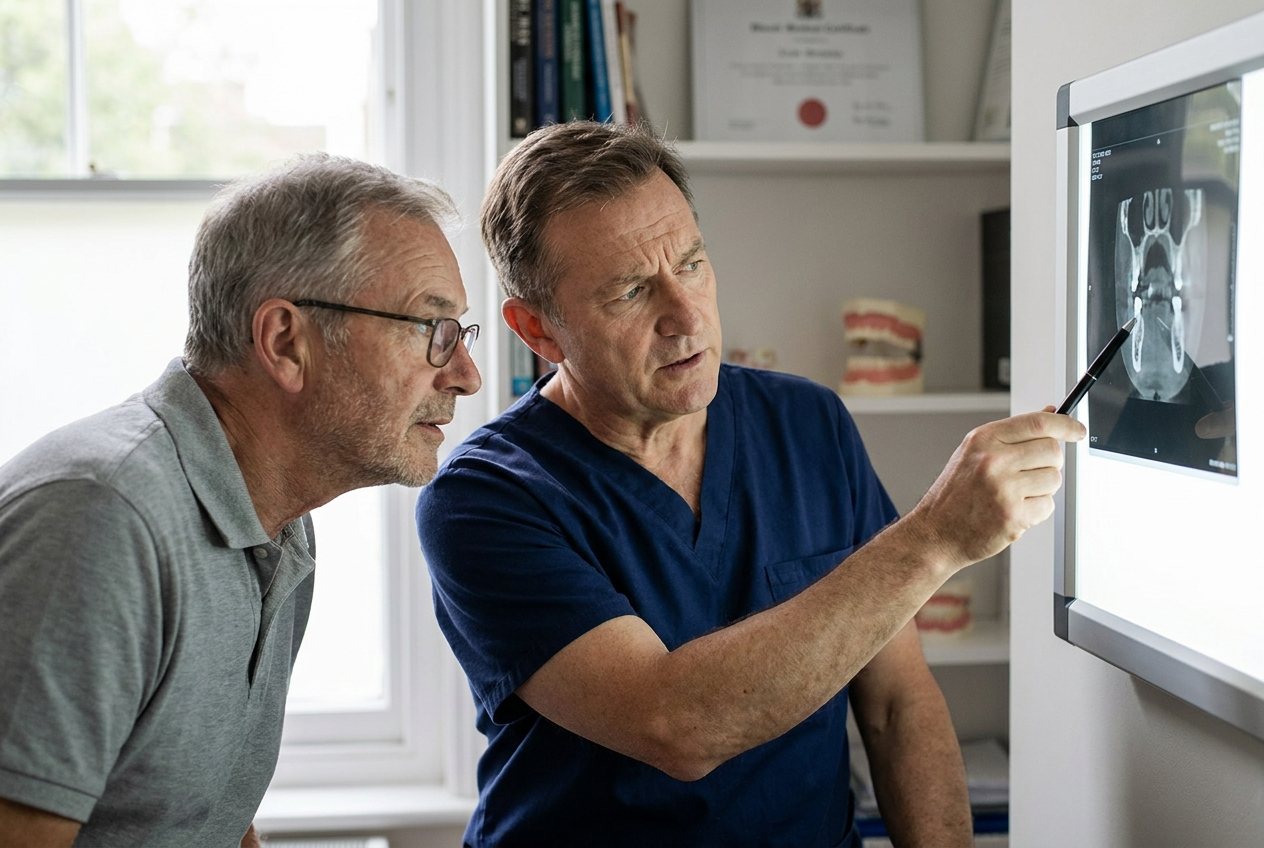
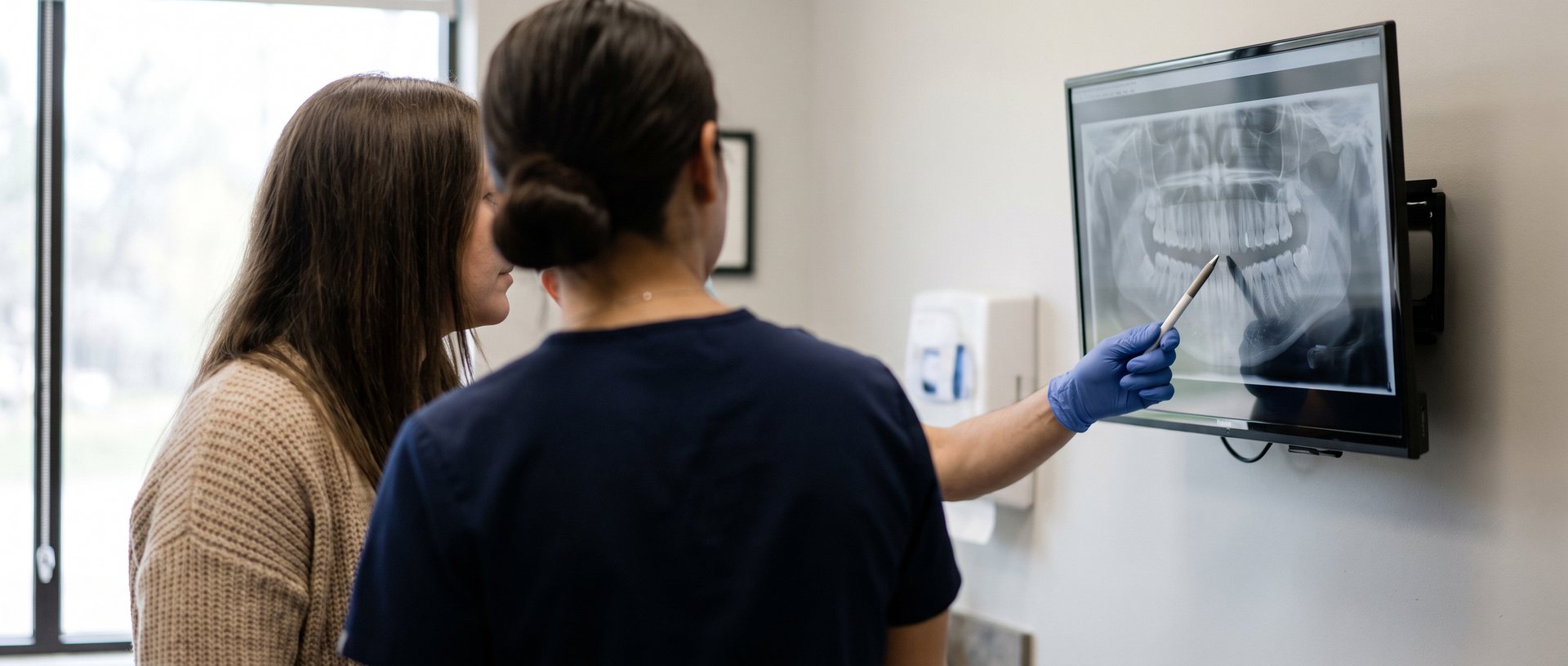
None of this is a verdict on one person. At ANEWU, your medical and dental history is reviewed at check-in, and a 3D scan shows bone volume and nerve position, so you and the surgeon look at the same picture before anything is recommended.
| Risk factor | What the research found | Source |
|---|---|---|
| Smoking | About 2.6 times the odds of early failure per implant (21 cohort studies within a 32-study review) | J Dent, 2024 |
| Past gum disease | About 2.3 times the risk of failure at more than five years of follow-up, and about 4 times the risk of peri-implantitis | Clin Implant Dent Relat Res, 2024 |
| Teeth grinding, radiation therapy | Linked to higher failure risk | Dent Clin North Am, 2019 |
| Diabetes, alcohol use | Risk indicators for peri-implantitis | J Periodontol, 2025 |
| Implant site | Failure about double in the upper molar region (3%) and central incisor region (3.37%) compared with other sites | J Funct Biomater, 2025 |
What is the downside of All-On-4 dental implants?
In the research, the main downsides are mechanical and biological complications rather than frequent implant loss. A 2026 meta-analysis of 55 studies found survival of 98.14% for All-On-4 and 97.50% for All-On-6 at five years or more, with pooled mechanical complication rates of 5.91% and 6.64%.
Mechanical complications are problems with the teeth or hardware. Biological complications, meaning problems in the tissue around the implants, were pooled at 6.54% for All-On-4 and 7.41% for All-On-6. Average bone loss around the implants was 0.77 mm in the short term and 1.28 mm at five years for All-On-4, against 0.85 mm and 0.94 mm for All-On-6. The authors noted that zirconia prostheses may reduce mechanical complications.
Two cautions apply. The authors say the conclusions should be read with care because the studies varied widely, and their longest follow-up group is simply five years or more, so the headline figures say little about how results hold up at 10 or 20 years. The numbers also do not rank the two designs. At ANEWU, All-On-4, All-On-6 and All-On-X are planned from the same 3D scan, with implant number and placement matched to your jaw anatomy.
Can a dental implant be fixed if it fails?
Often, yes, but it depends on the cause and the timing. Inflammation around an implant can be treated, and a lost implant can often be replaced. A 2025 meta-analysis of 24 studies found 96.7% one-year survival for implants placed where an earlier one had failed, though that is lower than for first-time implants.
For peri-implantitis, a 2025 AAP/AO network meta-analysis of 18 reports of randomized trials (635 patients, 687 implants) found that surgical reconstructive treatment of bone defects beside the implant reduced pocket depth and increased bone level, and did better than open flap debridement alone on those measures. The same paper notes that the literature still lacks a common remedy for predictable treatment, and it found that smoking affected results.
If an implant is lost, the replacement review recommends grafting followed by delayed placement when too little bone remains after removal. It also found that second replacements had lower survival than first replacements, so the first question is why the first implant failed. ANEWU's bone grafting page lists an implant that failed at the site, because of too little bone, as one reason a graft may be needed, and a 3D scan shows what bone is left.
How can you lower your risk of implant failure?
Tell your surgeon about gum disease, smoking, grinding and clenching, and any earlier implant problems, then keep up daily cleaning and regular checkups. A 3D scan lets your surgeon check bone volume and nerve position before planning, so the plan is built on measurements rather than guesses.
The research behind that advice is specific. Past gum disease was linked to higher failure and peri-implantitis risk. The authors of the 2024 smoking review concluded that quitting is a crucial factor in lowering the risk of early failure. A 2019 review lists teeth grinding among the factors linked to higher failure risk. Plaque is involved in both peri-implant mucositis and peri-implantitis. Bleeding, redness, swelling or pus around an implant are the signs clinicians look for. If you notice any of them, or anything that feels different, call the office.
At ANEWU, dental implant treatment starts with a free first consultation that includes a 3D scan taken in the office. Dr. Abtin Shahriari, an oral surgeon specializing in implant dentistry, reviews your imaging and history with you, and the visit ends with a plan rather than a signature. Our guide to what to expect at your first visit walks through it step by step, and you can book a free consultation whenever you are ready.
Sources and further reading
- Long-term (10-year) dental implant survival: A systematic review and sensitivity meta-analysis Journal of Dentistry, 2019
- Dental Implant Survival Rates: Comprehensive Insights from a Large-Scale Electronic Dental Registry Journal of Functional Biomaterials, 2025
- How far can we go? A 20-year meta-analysis of dental implant survival rates Clinical Oral Investigations, 2024
- Prevalence, incidence, systemic, behavioral, and patient-related risk factors and indicators for peri-implant diseases: An AO/AAP systematic review and meta-analysis Journal of Periodontology, 2025
- Timing and extent of peri-implant bone loss for dental implant removal: A retrospective cross-sectional analysis Clinical Oral Investigations, 2026
- Peri-implant diseases and conditions: Consensus report of workgroup 4 of the 2017 World Workshop on the Classification of Periodontal and Peri-Implant Diseases and Conditions Journal of Clinical Periodontology, 2018
- Smoking in relation to early dental implant failure: A systematic review and meta-analysis Journal of Dentistry, 2024
- History of periodontitis as a risk factor for implant failure and incidence of peri-implantitis: A systematic review, meta-analysis, and trial sequential analysis of prospective cohort studies Clinical Implant Dentistry and Related Research, 2024
- Are There Contraindications for Placing Dental Implants? Dental Clinics of North America, 2019
- All-on-4 and All-on-6 implant-supported fixed prostheses for the edentulous jaw: a systematic review and meta-analysis International Journal of Oral and Maxillofacial Surgery, 2026
- Outcomes of implants placed in sites of previously failed implants: a systematic review and meta-analysis International Journal of Oral and Maxillofacial Surgery, 2025
- Surgical Reconstructive Therapy for the Management of Peri-implantitis: An AAP/AO Systematic Review and Network Meta-analysis International Journal of Oral and Maxillofacial Implants, 2025
This article is general information about dental and facial procedures, not a diagnosis or medical advice. Every jaw and every health history is different, so the right plan for you can only be set after an exam and imaging with a surgeon.