





Short answer
Sometimes, but the evidence is mixed. Botox relaxes the jaw muscles, and some reviews find less jaw pain or muscle activity while others report no clear benefit over placebo. The FDA has not approved it for TMJ disorders or teeth grinding, so it is an off-label use. It treats the muscle, not the cause, and is usually reserved for symptoms that simpler care has not settled.
Can Botox be used to treat jaw pain?
Yes, clinicians use it for jaw pain, but only off-label. The FDA has not approved Botox for temporomandibular disorders (TMD), the jaw joint and muscle conditions commonly known as TMJ. The National Institute of Dental and Craniofacial Research (NIDCR) says studies have been mixed and it remains unclear whether the treatment relieves TMD symptoms. It is an option to discuss with a clinician, not a proven fix.
Botox is botulinum toxin type A, which works by relaxing the muscle it is injected into. For jaw problems, the targets are the chewing muscles: the masseter, which helps you chew and clench, and sometimes the temporalis, which helps close the jaw. The idea is that a muscle that cannot overwork gets a chance to settle. Cleveland Clinic describes it as a supplemental therapy and notes it likely will not solve the root problem or completely eliminate chronic pain.
The FDA-approved uses of Botox include overactive bladder, preventing headaches in chronic migraine, cervical dystonia, spasticity, severe underarm sweating, eyelid spasm and strabismus. The cosmetic version is approved for frown lines, crow's feet, forehead lines and neck bands. Jaw clenching and TMD are not on either list. A 2026 review in Current Pain and Headache Reports notes that clinicians use Botox widely for TMD anyway. ANEWU's Botox page explains how the practice uses it for jaw tension.
What does the research say about Botox for TMJ pain?
The reviews disagree. A 2024 meta-analysis of randomized trials found Botox relieved TMD muscle pain better than placebo but did not improve mouth opening. Another 2024 review of 14 trials and 395 patients concluded Botox was not associated with better outcomes, though the pain scores it pooled leaned toward Botox. Both reviews note limits in study quality, so the evidence points to possible benefit, not certainty.
Zhu and colleagues searched PubMed, Embase and the Cochrane Library and retrieved 519 studies. Twenty randomized trials were included and six could be pooled. Compared with placebo, Botox was more effective at relieving myofascial pain, and its effect was similar to conventional methods, but mouth opening did not differ. Six of the 20 trials had a low risk of bias, 13 raised some concerns and one had a high risk. The authors call for larger trials with longer follow-up.
Saini and colleagues identified 260 non-duplicate articles and included 14 randomized trials with 395 patients. They concluded Botox was not associated with better outcomes for pain, adverse events, mouth opening, bruxism events or maximum bite force, and they called for more high-quality trials. Yet the paper's own pooled pain scores from four trials favored Botox at one, three and six months, which sits uneasily with that conclusion, so read it as unclear rather than as proof of no effect. The reviews also pooled different studies: six trials for Zhu, four for pain in Saini.
| Review | What it included | What it concluded |
|---|---|---|
| Zhu et al., 2024 | 20 randomized trials, 6 pooled | Less myofascial pain than placebo; no change in mouth opening |
| Saini et al., 2024 | 14 randomized trials, 395 patients | Authors concluded no better outcomes than placebo or other treatments |
| Buzatu et al., 2024 (sleep bruxism) | 9 randomized trials | Possible benefit for pain and jaw function; findings preliminary |
| Val et al., 2026 (sleep bruxism) | 8 studies, 5 placebo-controlled | Lowers jaw muscle activity; effect on grinding frequency inconsistent |
Does Botox really work for teeth grinding?
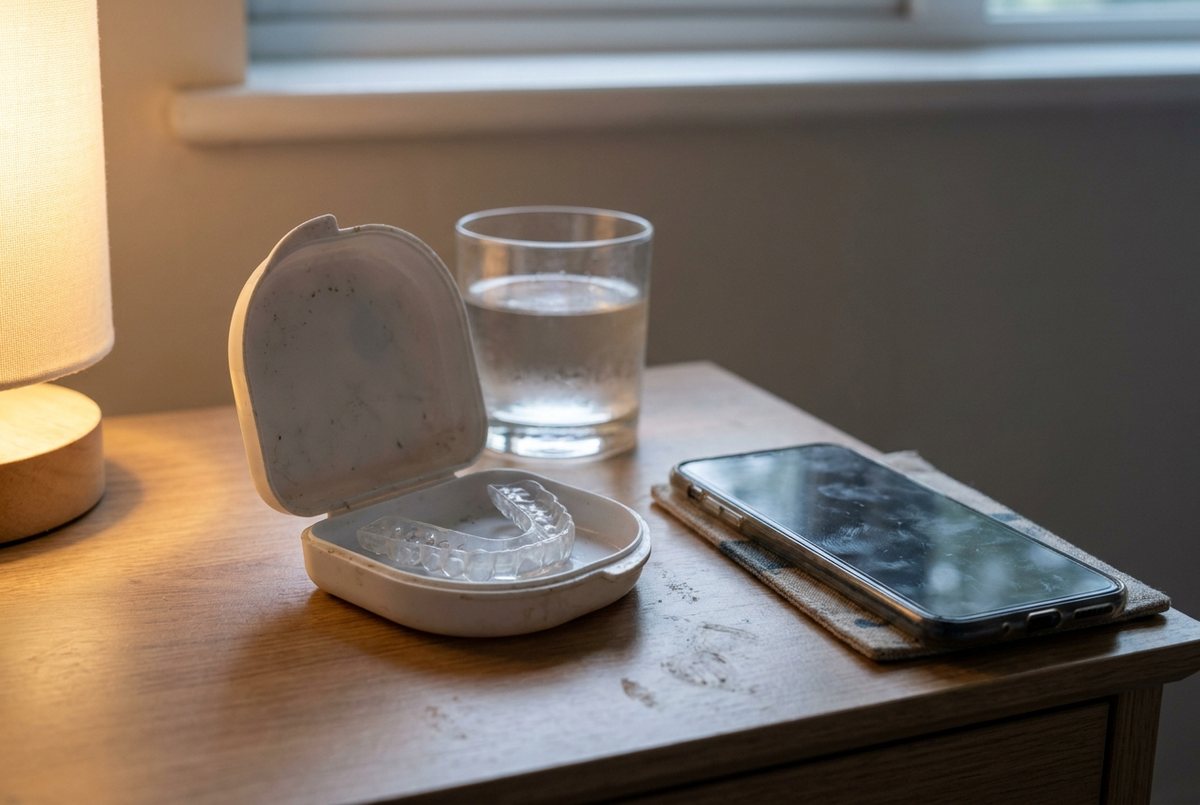
In studies, Botox lowers measured jaw muscle activity, but it does not clearly stop the grinding itself. A 2026 meta-analysis found reduced muscle activity in sleep bruxism, yet only one of six studies that also measured grinding frequency found a clear benefit. Botox acts on the muscle, not on what drives the habit.
That 2026 meta-analysis in the Journal of Clinical Medicine pooled five placebo-controlled trials. The reduction in muscle activity did not reliably translate into less grinding: of six studies that also measured frequency by questionnaire, clinical impression or sleep study scoring, five found no significant difference from the comparison. The authors rated certainty for that outcome as very low and said the review gives no direct evidence of benefit on pain or function.
Smaller studies show why people try it, and why caution is needed. A 2024 systematic review of nine randomized trials with 137 participants found results that varied widely: one trial reported mean pain scores falling from 7.1 to 0.2, while others reported small, short-lived or no clear changes. The review called its findings preliminary and did not pool the results. None of this shows the habit goes away. The NIDCR lists stress, caffeine, alcohol, smoking and certain medicines as factors in bruxism, and Botox acts on the muscle rather than on those factors.
What are the risks and side effects of Botox in the jaw?
Side effects in the studies were mostly mild and temporary, but the risks are real. They include injection site pain, bruising, a change in your smile and muscle weakness. The Botox label carries a boxed warning that the toxin's effects can spread beyond the injection site, and a 2026 review notes that no prospective studies have examined the long-term effects of jaw injections.
A 2024 systematic review of sleep bruxism trials described adverse effects as generally mild and transient, including injection site pain in 20% of participants in one study and cosmetic changes to the smile in 15.4% of patients in another. Cleveland Clinic lists swelling, headaches, neck pain, muscle weakness and an uneven or fixed smile among reported side effects, and advises getting injections only from a licensed provider in a medical setting.
The boxed warning says effects may spread from the injection area and cause weakness, swallowing or breathing difficulties, with symptoms reported hours to weeks after injection, including in unapproved uses. A 2026 narrative review adds potential long-term risks of jaw injections, including loss of bone density and changes in muscle structure, with no prospective studies of long-term consequences. Ask who will inject, which muscles they will treat and how the dose was chosen.
Is Botox in the masseter worth it?
It can be worth discussing when jaw pain or clenching continues after simpler care and you accept an off-label treatment that wears off. A 2026 review concludes Botox is not a first-line treatment or standard of care for TMD, and a 2026 meta-analysis calls it a candidate add-on for people who do not respond to conservative treatment.
The 2026 narrative review says Botox can be effective for muscle-based TMD and significant bruxism that have not responded to conventional therapy, and that evaluation by an orofacial pain specialist or a clinician familiar with TMD is critical for choosing patients well. A 2023 meta-analysis of bruxism trials says injections may be considered, especially for people who struggle to wear night guards and people who want earlier relief.
Because Botox acts on the muscle, it cannot repair a joint problem. ANEWU's TMJ page says joint and bite concerns are reviewed with Dr. Abtin Shahriari first, and its Botox page says that if your symptoms suggest something other than clenching, you will be told so rather than treated around it. The NIDCR says many TMDs go away on their own, which is one more reason to start simply.
- A better fit: muscle-driven jaw tension or clenching that has lasted despite a night guard, habit changes and physical therapy.
- A better fit: you struggle to wear a night guard, or you want relief sooner and accept repeat visits.
- A poorer fit: clicking without pain, which the NIDCR calls common, normal and not in need of treatment.
- A poorer fit: locking or limited opening, which points to the joint and needs an evaluation first.
- Not used at ANEWU: during pregnancy or while nursing.
What can you try before or alongside Botox for TMJ?
Start with simple, reversible care. Because evidence for many TMD treatments is limited, the NIDCR says experts recommend conservative treatments and avoiding irreversible changes to the jaw joints, teeth or bite, or surgery. Options include soft foods, heat or cold with gentle stretching, cutting clenching habits, physical therapy, behavioral approaches and, for some people, a night guard.
For a sore jaw, the NIDCR suggests soft foods, heat or cold combined with gentle stretching and strengthening exercises, and reducing clenching, gum chewing and nail biting. If those steps do not help, physical therapy, cognitive behavioral therapy and biofeedback may be recommended, and the NIDCR says manual therapy can help improve function and relieve pain. For grinding, its bruxism page lists behavior change, stress management and mouth guards that separate the teeth to prevent damage.
Night guards and Botox have been compared directly. A 2026 review of 36 studies concluded they give similar improvement in the clinical effects of adult sleep bruxism, with night guards preferred when preventing mechanical damage and keeping normal function are the goals. A 2023 meta-analysis found Botox acts sooner but fades, while night guards had a more enduring effect after about 9 to 12 weeks. The NIDCR adds there is not a lot of evidence that night guards improve TMD pain.
| Feature | Night guard | Botox in the jaw muscles |
|---|---|---|
| What it does | Separates the teeth to prevent damage | Relaxes the injected muscle and lowers its activity |
| Timing | Worn at night at home | Effects evident within 4 weeks, peaking at 5 to 8 weeks, lasting up to 24 weeks, per a 2023 meta-analysis of bruxism trials |
| Evidence | Limited for TMD pain; similar to Botox for sleep bruxism effects | Mixed across reviews; off-label |
| Protects teeth | Yes, it separates the teeth | No, per ANEWU's TMJ page |
How much does Botox for teeth clenching cost, and will insurance pay?
ANEWU does not publish a price for jaw treatment, because the cost depends on your case and is quoted at a free consultation. Botox wears off, so treatment repeats every few months. Coverage varies by plan, and ANEWU says dental and medical insurance often does not cover TMJ treatment, so check your plan before you book.
Cost depends on how many areas are treated and how much product each needs, according to ANEWU's Botox page. Cleveland Clinic says most people who get Botox for TMJ pain find it lasts about three or four months, and severe pain or very strong jaw muscles may need more frequent treatment. That makes it a recurring cost rather than a one-time fix. ANEWU accepts CareCredit and Proceed Finance and can arrange monthly payment plans before treatment begins.
Because Botox for TMJ is off-label, do not assume your plan covers it. Before you book, ask your plan whether it covers botulinum toxin for TMJ disorder, whether it requires prior authorization, and whether you must try other treatments first, and ask for the answers in writing if you can.
What happens at a jaw and TMJ consultation at ANEWU?
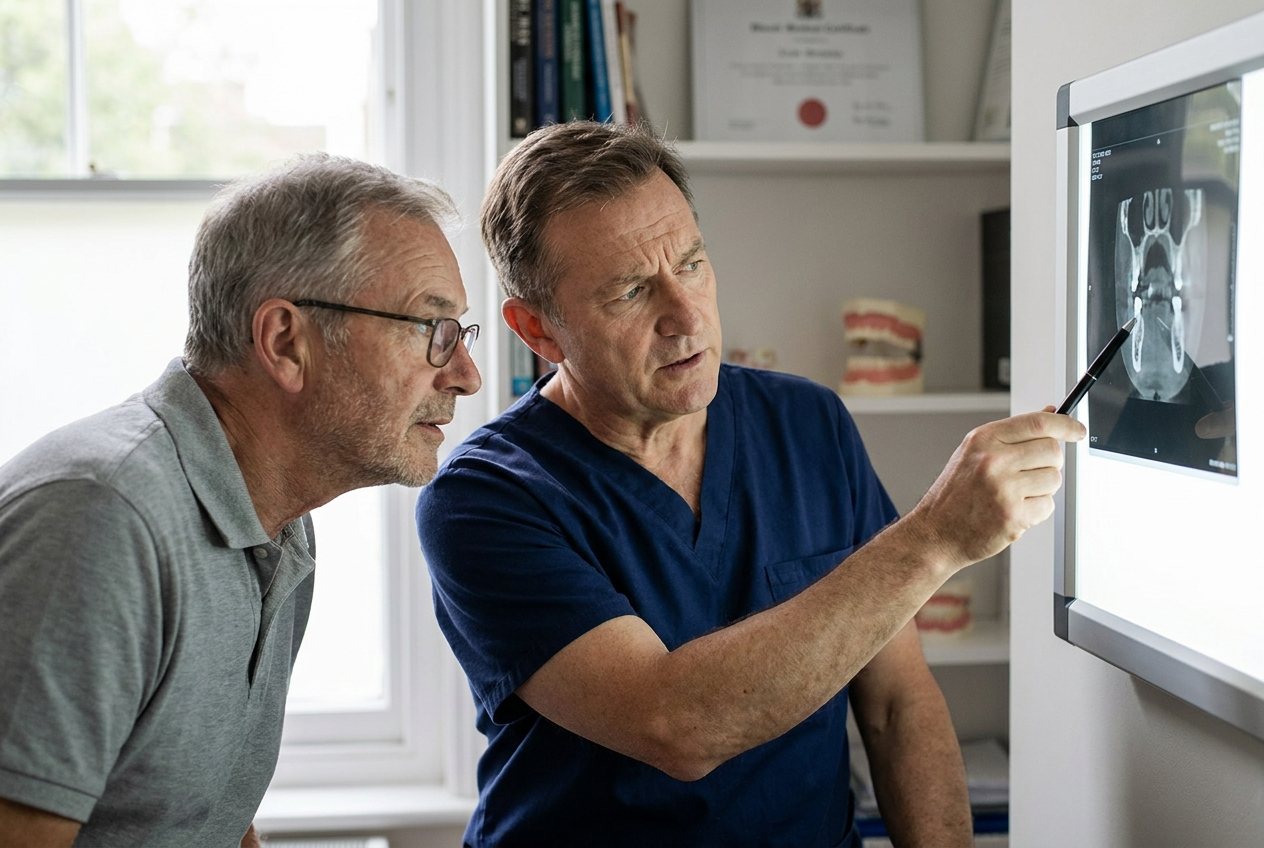
A consultation covers when your symptoms started, an exam of how your jaw opens, closes and tracks, and a check of the muscles and joint for tenderness. Dr. Arshia Payman may recommend Botox if muscle tension is the driver. If the joint or bite is involved, your case is reviewed with Dr. Abtin Shahriari first. The consultation is free.
Dr. Arshia Payman, a board-certified physician specializing in aesthetic medicine, leads facial aesthetics at ANEWU and places Botox in the jaw muscles when tension and clenching are the main driver. Dr. Abtin Shahriari, an oral surgeon, leads the joint and bite evaluation. ANEWU's TMJ page says surgery is reserved for select cases and is not the starting point.
A Botox visit takes about 15 to 20 minutes with a fine needle and no anesthesia, and most patients go straight back to their day. ANEWU has offices in Buckhead, Cumming and Dawsonville, open Monday to Saturday, 7am to 5pm. If you want to talk through whether Botox, a night guard or a joint evaluation fits your symptoms, you can book a free consultation or call (470) 567-6415.
Sources and further reading
- Temporomandibular Disorders (TMD) National Institute of Dental and Craniofacial Research, reviewed September 2026
- Bruxism National Institute of Dental and Craniofacial Research, reviewed March 2025
- BOTOX (onabotulinumtoxinA) prescribing information and Medication Guide DailyMed, U.S. National Library of Medicine, label version published August 2026
- BOTOX Cosmetic (onabotulinumtoxinA) prescribing information DailyMed, U.S. National Library of Medicine, label version published January 2026
- Effects of botulinum toxin type A in patients with painful temporomandibular joint disorders: a systematic review and meta-analysis Annals of Medicine and Surgery, 2024
- The effectiveness of botulinum toxin for temporomandibular disorders: A systematic review and meta-analysis PLoS One, 2024
- Efficacy and Safety of Botulinum Toxin in the Management of Temporomandibular Symptoms Associated with Sleep Bruxism: A Systematic Review Dentistry Journal, 2024
- Effectiveness of Botulinum Toxin Injection on Bruxism: A Systematic Review and Meta-analysis of Randomized Controlled Trials Aesthetic Plastic Surgery, 2023
- Effects of Botulinum Toxin Injection on Masticatory Muscle Activity in Sleep Bruxism: A Systematic Review and Meta-Analysis Journal of Clinical Medicine, 2026
- Occlusal splints versus botulinum toxin for the management of clinical sequelae associated with adult sleep bruxism: A systematic review and meta-analysis Cranio, 2026
- The Management of Myogenous Temporomandibular Disorders with Botulinum Toxin: A Narrative Review and Management Recommendations Current Pain and Headache Reports, 2026
- Botox for TMJ Pain: What To Expect Cleveland Clinic, January 2025
This article is general information about dental and facial procedures, not a diagnosis or medical advice. Every jaw and every health history is different, so the right plan for you can only be set after an exam and imaging with a surgeon.